
Viktor

by Viktor

Your Out-of-State Rental Is Empty: A 7-Step Plan to Stop Listing Scammers and Squatters Before They Find It
October 23, 2026 in Real Estate Investing
Between tenants, your rental is just a quiet house with listing photos all over the internet. For an owner who lives 1,000 miles away, that is the risky stretch: scammers can copy your ad and “rent” the place to strangers, and an empty house is easier for someone to move into without asking. Here is a practical plan for the weeks it sits empty.
What the official sources say
- Listing scams are common and mostly start on social media. Since 2020, people have reported nearly 65,000 rental scams to the FTC, with about $65 million in losses. In the 12 months ending June 2025, about half of people who reported one said it started with a fake ad on Facebook, and another 16% said Craigslist (FTC Data Spotlight, Dec. 2025).
- The usual method is copying a real listing. Scammers copy the photos and description of a real rental, swap in their own contact details, and repost it elsewhere. They typically avoid in-person showings and push for an application fee or deposit up front (FTC: Rental Listing Scams).
- Your insurance may cover less once the house sits empty. The standard ISO DP-3 dwelling form excludes vandalism and malicious mischief, and certain glass breakage, if the dwelling has been vacant for more than 60 consecutive days before the loss (ISO DP 00 03 07 14). Your own policy may use different wording, so check it.
- Several states added faster remedies for unauthorized occupants:
- Florida lets an owner or authorized agent file a sworn complaint with the county sheriff to remove people who were never tenants. The property must not have been open to the public, the owner must have told them to leave, and no related lawsuit can be pending. A person wrongfully removed can sue for damages, including triple the fair market rent plus attorney fees (Fla. Stat. 82.036).
- Georgia made “unlawful squatting” a misdemeanor. A person who gets a citation has three business days to produce a lease or proof of rent payments (HB 1017, O.C.G.A. 16-7-21.1).
- Texas allows a landlord who files a sworn forcible-entry petition to ask for summary disposition without a trial, for suits filed on or after January 1, 2026 (SB 38 bill analysis).
- New York added to RPAPL 711 that a squatter is not a tenant (RPAPL 711).
The misconception: “If squatters show up, I’ll just call the police”
Interpretation, not fact: The faster state procedures above share one condition: you have to prove the occupants never had permission. Florida’s process does not apply to current or former tenants, and the complaint is signed under penalty of perjury. Georgia’s process turns on whether the occupant can produce a lease or proof of rent. A scammer who “rented” your house to a family has given those people a lease and payment receipts. They are victims too, and a fake lease can push the case out of a quick police matter and into the slower court process. The cheapest fix is to make the fake listing fail before anyone pays for it.
The 7-step vacant-rental plan
- Search for your own address the day the listing goes live, then twice a week. Search the street address in quotes, and check Facebook Marketplace and Craigslist for your listing photos. FTC’s own tip for renters is to look for the same address listed under a different name or price. Do the same check from the owner’s side.
- Put one verification line in your real ad. For example: “Listed only by [your name/company]. We never ask for payment before a tour or a signed lease.” Name the single phone number or website applicants should use. This gives would-be victims a way to spot the fake.
- Report copies right away. Use the platform’s report button and file at ReportFraud.ftc.gov. Save screenshots with dates. If someone later turns up holding a “lease,” that file is your evidence that you never authorized it.
- Control the keys and codes. Rekey or change smart-lock codes at turnover (see the 14-day turnover plan). Use one-time showing codes that expire. Avoid a lockbox code that stays the same for weeks.
- Make the house look occupied, and check it in person every week. Keep utilities on, set lights on timers, have the mail picked up and the yard cut. Pay a vetted local handyman or your manager to walk the house weekly and send dated photos of every door, the windows, and the thermostat. Illustrative cost, not a quote: $40-$75 per visit.
- Mark day 45 and day 60 on your calendar. Before day 60, call your agent. Ask what your landlord policy says about vacancy, and whether you need a vacancy endorsement or a separate vacant-dwelling policy.
- Have a written “unknown occupant” plan before you need one. Keep a short file ready: your deed or tax record, a copy of your ID, a letter authorizing your local manager or agent to act for you, and the non-emergency number for the local sheriff. If someone is inside: do not change the locks, cut utilities or confront them yourself. Call law enforcement, give them your documents, and talk to a local landlord-tenant attorney about which process applies.
Questions to ask your property manager
- Who checks for copies of the listing, and how often?
- Are showing codes one-time or reused? Who can see the access log?
- Will you send weekly dated photos while the house is empty?
- What would you do in the first hour if you found someone living there?
The best protection is a short vacancy. Price the unit correctly from day one with the 6-step rent pricing method, and see the broader guide to managing out-of-state property yourself.
This article is for general educational purposes only and is not legal, tax, insurance, financial or investment advice. Removal procedures differ by state and county and change over time. Confirm your situation with a licensed local attorney, your insurance agent and local law enforcement before acting. Cost figures are illustrative examples, not quotes. The featured image is an AI-generated illustration.
Related: The 9-point mid-lease inspection for out-of-state landlords
by Viktor

Closing on a Rental 1,000 Miles Away: A Remote Landlord’s Closing-Week Plan and 8-Step First-30-Days Checklist
October 22, 2026 in Real Estate Investing
You found the house, your inspector walked it on video, and the numbers work. Now comes the part most first-time remote buyers underestimate: closing on a property 1,000 miles away, then getting it running before the first rent check is due. This is a practical plan for closing week and the 30 days after it, written for owners of one to five doors.
The misconception: “My lender has to send me the final numbers three days before closing”
Many buyers expect the federal three-business-day Closing Disclosure they got on their own home. On a rental, that may not happen. Under the CFPB’s official interpretation of Regulation Z, credit “to acquire, improve, or maintain rental property (regardless of the number of housing units) that is not owner-occupied is deemed to be for business purposes”, and business-purpose credit falls outside those consumer disclosure rules. The same comment says that if you expect to live in the property more than 14 days in the coming year, it does not count as non-owner-occupied (CFPB, Reg. Z comment 3(a)-4).
Interpretation, not fact: many investment lenders still send a settlement statement early, but you should not assume a legal deadline protects you. Ask your loan officer and title company in writing, at contract signing, for the final settlement statement at least three business days before closing. That gives you time to compare it with your loan estimate and the purchase contract.
Signing from home is usually possible, but confirm it early
Remote online notarization (RON) lets you sign with a notary over two-way video. The Mortgage Bankers Association reports that 45 states and DC have enacted RON laws for real estate transactions, and notes that Connecticut’s law excludes real estate (MBA). Texas lets an online notary act “regardless of whether the principal is physically located in this state” and requires ID checks by video (Tex. Gov’t Code 406.110). Florida has a similar rule and requires the session to be recorded (Fla. Stat. 117.265).
A state law allowing it does not mean your lender and title company will use it. Ask both in the first week under contract. The fallback is a mobile notary at your home or a “mail-away” signing package, which needs extra days for overnight shipping.
The wire is the most dangerous step
The CFPB warns that scammers watch real estate email threads and send fake “updated” wiring instructions near closing. Its advice: agree on the payment process by phone ahead of time, write down trusted contacts and numbers, and never follow wiring instructions that arrive by email (CFPB). Colorado’s real estate regulator adds a simple step: call the settlement agent right after you send the money to confirm it arrived (Colorado Division of Real Estate).
Remote buyers are easy targets because every message comes by email. Get the title company’s phone number from its website or your signed contract, never from the email asking for money.
Title, LLCs and paperwork you will need later
- Owner’s title policy. The lender’s policy protects the lender. An owner’s policy can protect you if someone later claims an interest from before your purchase, such as unpaid contractor bills or back taxes (CFPB). Decide before closing day, not at the table.
- Buying in an LLC with cash? FinCEN’s rule requiring reports on non-financed transfers to entities and trusts was vacated by a federal court on March 19, 2026. FinCEN has appealed, and while the order stands, reporting persons do not have to file (FinCEN). If your title company asks for ownership details, that may be why. The status could change.
- Keep the final settlement statement forever. IRS Publication 527 says certain closing costs, including title insurance, recording fees, transfer taxes, surveys and legal fees, become part of your basis. Loan costs such as points, appraisal fees and fire insurance premiums do not (IRS Pub. 527). Your tax preparer will need this document for depreciation.
The first 30 days: a numbered checklist
- Closing day: insurance starts. Your landlord (dwelling) policy should begin on the closing date, not when the tenant moves in. Check the forms and limits with our landlord insurance checklist.
- Day 1-2: get the documents. Ask the title company for the signed settlement statement, the recorded deed (or proof it was sent for recording), the owner’s title policy when issued, and the leases and deposit records if a tenant is in place.
- Day 1-3: utilities and keys. If the home is vacant, move water, power and gas into your name so pipes stay heated, and have a locksmith rekey. Nobody knows how many keys the seller handed out.
- Day 1-5: tell the tenant who you are. Send a letter with the new owner or manager’s name, a notice address, and how to pay rent. Florida requires landlords to disclose a name and address for notices in writing, and changes must be delivered to the tenant (Fla. Stat. 83.50). Texas requires disclosure of the record owner and any off-site management company, for example in the lease or within seven days of a tenant’s request (Tex. Prop. Code 92.201).
- Day 5-10: set up rent collection before the 1st, so the tenant does not keep paying the old owner. Our rent collection system walks through the steps.
- Day 7-14: confirm the tax and HOA bills. Check the county tax office and any HOA have your mailing address. If taxes are not escrowed, put the due dates on your calendar. If the seller had a homestead exemption, plan for a higher bill next year.
- Day 10-30: walk the house once. Pay your handyman or property manager for a short video walk-through to confirm smoke alarms, water heater, HVAC filter and any repairs promised at closing. If you are still choosing a manager, see how to hire a property management company.
- Day 30: start the file. One folder for the settlement statement, deed, policies, lease, deposit records and receipts. Next spring you will be glad you did.
If you have not closed yet, start with our remote due-diligence plan, and browse more resources and tools for remote owners.
This article is general education, not legal, tax, lending, or investment advice. Laws, lender practices and court rulings change; confirm details with your title company, lender, and a licensed attorney or tax professional in the property’s state. Featured image is AI-generated and illustrative.
Related: Your rental is empty: stop listing scammers and squatters
by Viktor
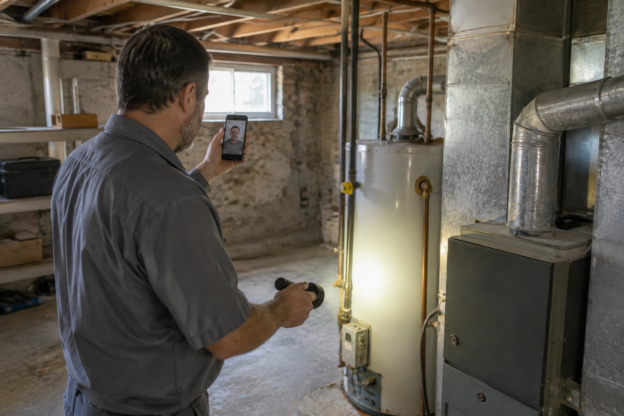
Buying a Rental You Can’t Walk Through: An 8-Step Remote Due-Diligence Plan Before Your Option Period Ends
October 21, 2026 in Real Estate Investing
Buying a rental in another state usually means making an offer on a house you have only seen in listing photos. That is normal, and it can work. The risk is not the distance. The risk is a short contract deadline passing before you have learned what a local buyer would have noticed on a walk-through. Here is an eight-step plan for one-to-five-door owners to run remote due diligence while you can still walk away.
The misconception: “The appraisal will catch any big problems”
It will not. HUD’s own buyer notice, For Your Protection: Get a Home Inspection, says it in bold: “Appraisals are NOT Home Inspections.” An appraisal estimates value for the lender. The same notice says a home inspection “will only occur if you arrange for one.” No one is checking the furnace, the roof or the sewer line on your behalf unless you hire them.
Step 1: Know your clock before you sign
Your right to back out usually lives in the contract, not in a law. In Texas, the standard TREC one-to-four family resale contract gives the buyer an “unrestricted right to terminate” during a negotiated option period, in exchange for an option fee. Notice must be given by 5:00 p.m. local time where the property is located. Other states use inspection contingencies with their own deadlines. Ask your agent for the exact date and time, in the property’s time zone, and put it on your calendar.
Interpretation, not fact: for a remote buyer, a seven-day window is short. Book the inspector before you sign, not after.
Step 2: Hire your own inspector and be on the call
Pick the inspector yourself, not just the first name on the listing agent’s card. HUD suggests asking for the inspector’s Standards of Practice or a sample report before you hire. Ask whether they will do a 15-minute live video walk at the end. You want to see the attic, the electrical panel, the water heater and the foundation through their camera, and ask “how old is that?” while they are standing in front of it.
Step 3: Add the tests a standard inspection skips
HUD’s notice lists extra tests worth asking about, including mold, water quality, asbestos, lead paint and pests. It also says EPA and the Surgeon General recommend testing all houses for radon. EPA’s radon risk page says to fix a home at 4 pCi/L or higher. For older houses, common add-ons are a sewer camera scope and a separate roof or foundation look. Get prices before you sign so they fit inside your window.
Step 4: Use your lead-paint window on pre-1978 houses
Federal rules give you a specific right here. Under 40 CFR 745.110, the seller of pre-1978 housing must give the buyer a 10-day period to do a lead-based paint inspection or risk assessment before the buyer is obligated, unless both sides agree in writing to a different period. You can also waive it in writing. Read before you sign anything that waives it. As a landlord, you will owe your own tenants lead disclosures later.
Step 5: Read the seller’s disclosure line by line
Many states require a written seller disclosure. Texas Property Code §5.008 lays out a form for single-unit homes that asks about the roof type and age, known defects and more, with Yes, No or Unknown answers. A long list of “Unknown” answers on a house the seller rented out is a good reason to ask more questions. Hand the disclosure to your inspector so they can check the items on it.
Step 6: Check flood risk and get an insurance quote
Look up the address on FEMA’s Flood Map Service Center, then get a real landlord-policy quote before your window closes. Insurance can swing your monthly numbers more than the price does. Use our landlord policy checklist to compare quotes, and rerun the nine-line cash-flow math with the inspector’s repair list added in.
Step 7: If a tenant is in place, get the deposit in writing
Buying with a tenant means buying their lease and their deposit. In Texas, §92.105 makes the new owner liable for returning security deposits from the date title is acquired. The new owner must also give the tenant a signed statement with the exact deposit amount. Florida’s §83.49(7) requires deposits and advance rents to be transferred to the new owner with an accounting for each tenant. Before closing, ask for a copy of every lease, a rent ledger and a written list of deposits, and have your closing agent credit or transfer the money.
Step 8: Treat every wiring instruction as a possible scam
Remote buyers do everything by email, which is exactly where fraudsters work. The FBI’s 2024 Internet Crime Report lists $2.77 billion in reported business email compromise losses. Its separate real estate fraud category, which also covers rental and timeshare scams, shows 9,359 complaints and $173.6 million in losses. Before sending closing funds, call the title company at a phone number you found yourself, not one in the email. Confirm the account details out loud.
Your remote due-diligence checklist
- Write down the option or inspection deadline, with time and time zone.
- Book your own inspector before signing; ask for a sample report and a live video walk.
- Price radon, sewer scope and any roof or foundation add-ons.
- On pre-1978 homes, keep the 10-day lead inspection window unless you choose to waive it.
- Send the seller disclosure to your inspector; question every “Unknown.”
- Check the FEMA flood map and get a written insurance quote.
- If tenant-occupied: leases, rent ledger, deposit list, and a transfer at closing.
- Verify wiring instructions by phone using a number you looked up yourself.
Still choosing where to buy? Start with our six-filter market screen, and see how to manage an out-of-state rental yourself for what comes after closing.
This article is general education, not legal, tax, lending, insurance, or investment advice. Contract terms and disclosure rules vary by state and by contract; the statutes and figures above are from the linked public sources as of October 2026 and can change. Consult a licensed agent, inspector, attorney or closing professional before acting. The featured image is AI-generated and illustrative.
Related: Closing on a rental 1,000 miles away: closing-week plan and first-30-days checklist
by Viktor

How to Pick Your First Out-of-State Rental Market: A 6-Filter Screen You Can Run in One Evening
October 20, 2026 in Real Estate Investing
Most first-time out-of-state landlords pick a market the same way: a podcast mentions a “cash-flow city,” a listing looks cheap, and three weeks later they own a house in a neighborhood they have never seen. You can do better from your kitchen table in one evening, using free public data. Here is a six-filter screen built for owners buying their first one to five doors, not institutional funds.
The misconception: “Pick the right city”
A metro area is too big to be a decision. The same city can hold blocks that rent in a week and blocks that sit empty for months. HUD’s FY2026 Small Area Fair Market Rents show this plainly. In the Memphis HUD metro area, the three-bedroom figure ranges from $1,390 to $2,520 across 105 ZIP codes. In the Indianapolis HUD metro area, it runs from $1,440 to $2,850 across 136 ZIP codes. (Fair Market Rents are a 40th-percentile gross rent estimate, meaning rent plus tenant-paid utilities, so treat them as a rough yardstick, not your asking rent.)
Interpretation, not fact: use the city-level filters below to build a shortlist of two or three metros, then do the real work at the ZIP code and street level.
Filter 1: Can you get there in one day?
Something will eventually require you on site: a closing, a major repair, a bad tenant situation, a property manager you need to fire. A market reachable by one nonstop flight or a half-day drive keeps that trip to one or two days instead of three. This filter costs nothing and eliminates half the country for most people. It also matters for the tactics in our guide to managing an out-of-state rental yourself.
Filter 2: Are the jobs holding up?
Tenants pay rent from paychecks, so look at the metro’s employment trend, not its headlines. The Bureau of Labor Statistics publishes monthly payroll jobs and unemployment for every metro. For example, BLS data (not seasonally adjusted, preliminary) show the Memphis metro at about 657,400 jobs in September 2026 versus 656,300 a year earlier, and Indianapolis at about 1,175,300 versus 1,182,300. That is roughly flat in one and slightly down in the other. Neither number disqualifies a market by itself, but a metro shedding jobs for a year or more is a reason to dig deeper before you buy.
Filter 3: Vacancy, read the margin of error
The Census Bureau’s Housing Vacancy Survey publishes rental vacancy rates for the 75 largest metros. They are useful, but noisy. Jacksonville’s rate was 20.6% in Q1 2026 and 9.3% in Q2, with margins of error of 7.2 and 5.2 points. Census notes the margin of error, added to and subtracted from the estimate, forms a 90% confidence interval. In plain English: one quarter’s number for one metro can be off by several points. Look at several quarters (the 2015-2025 table is on the same page) and compare with what local property managers tell you about days-on-market.
Filter 4: Does the rent actually cover the costs?
Price-to-rent is where most “cheap” markets fail. Before you fall for a $150,000 house, run the nine-line monthly math from our cash-flow guide: mortgage, tax, insurance, vacancy, repairs, capital reserves, management, HOA, and utilities you pay. For rent, use real comparable listings, not FMR, as we explain in how to set the rent.
Filter 5: Look up the tax rate a landlord pays
Published property tax rates usually describe owner-occupied homes. The Tax Foundation county table lists effective rates of 0.89% for Marion County, Indiana, and 0.97% for Shelby County, Tennessee, but those are owner-occupied figures. Rentals can pay more. Indiana is a clear example: its Department of Local Government Finance explains that tax caps are 1% of gross assessed value for a homestead but 2% for other residential property, and voter-approved referendum taxes sit outside the caps. Call the county assessor or check a current tax bill for a comparable rental before you trust any rate.
Filter 6: Know the landlord rules before you need them
Read the state’s landlord-tenant statute for two things: the late-rent notice process and the security deposit deadline. Florida, for example, lets a landlord terminate for nonpayment only after a written 3-day demand that excludes weekends and court-observed holidays, under Fla. Stat. 83.56(3). Also ask the city whether it requires rental registration or inspections. While you are at it, check the address on FEMA’s Flood Map Service Center and get an insurance quote early. Our landlord insurance checklist lists what to ask.
Your one-evening market screen
- List five metros you could reach in a day.
- Pull each metro’s BLS payroll trend for the last 12 months; flag any steady decline.
- Read three or more quarters of Census rental vacancy, noting the margins of error.
- Open HUD’s Small Area FMR page and note which ZIP codes cluster at the low and high end.
- Run the nine-line math on two real listings per metro, using the non-homestead tax rate and a real insurance quote.
- Read the state’s notice and deposit rules and the city’s rental registration page.
- Interview two property managers per finalist metro, using our hiring guide, and ask which ZIP codes they avoid and why.
Cut to the one metro that passes every filter. Then walk the specific streets on video with a local agent or manager before you make an offer. More planning tools are in our resources section.
This article is general education, not legal, tax, lending, or investment advice. Figures are from the public sources linked above as of October 2026, may be preliminary, and can change; metro names are examples, not recommendations. Verify current rules and numbers and consult licensed professionals before acting. The featured image is AI-generated and illustrative.
Related: Buying a rental you can’t walk through: an 8-step remote due-diligence plan
by Viktor

Your Rental Is in an HOA and You Live 1,000 Miles Away: 7 Things to Lock Down Before the First Violation Letter
October 19, 2026 in Real Estate Investing
If your out-of-state rental sits inside a homeowners association, you have a second “landlord” of your own: a board that can fine you, lien the house, and in some states collect your tenant’s rent. Most HOA trouble for absentee owners doesn’t start with a big dispute. It starts with a letter mailed to an address nobody checks.
This guide covers what a 1-5 door owner should set up so HOA issues get handled on time, from wherever you live.
How common is this?
Fact: The Foundation for Community Association Research estimates there were about 369,000 community associations in the U.S. in 2024 (HOAs, condos and co-ops), covering 28.8 million housing units and 77.1 million residents (FCAR 2025 Statistical Review). If you buy newer single-family homes or townhomes in Sun Belt markets, odds are good you’ll own at least one property in an association.
The misconception: “The HOA will just contact my tenant or my property manager”
Many states require notices to go to the owner, and specifically to the address the association has on file.
- Texas: Before levying a fine, suspending common-area use or reporting a delinquency to a credit bureau, the association must send written notice by certified mail to the owner’s “last known address as shown on the association records,” with a cure period for curable violations and a right to request a hearing within 30 days (Tex. Prop. Code 209.006). Before filing an assessment lien, it must send a first delinquency notice, a second certified notice at least 30 days later, and wait 90 more days (209.0094).
- Florida: A fine or suspension requires at least 14 days’ written notice of a hearing, sent to the owner’s “designated mailing or e-mail address in the association’s official records.” Fines are capped at $100 per violation and $1,000 total for a continuing violation unless the governing documents say otherwise, and a fine under $1,000 can’t become a lien (Fla. Stat. 720.305).
Interpretation, not fact: These protections only help you if the notice reaches you. If the HOA still has the property address (where your tenant gets the mail) or the seller’s old email, the clock can run out while you know nothing about it.
The Florida rule that surprises remote owners
If a Florida HOA parcel is rented and the owner falls behind on any money owed to the association, the association can send the tenant a written demand to pay future rent directly to the HOA until the owner’s balance is paid. A tenant who pays the association is protected from claims by the landlord for that rent (Fla. Stat. 720.3085(8)).
Interpretation: For a remote owner, the first sign of a missed autopay or a disputed special assessment could be rent that stops arriving. That’s one more reason to put HOA dues on the same watch list as your mortgage. Our rent collection system works better when you also know who else might be collecting.
Can the HOA stop you renting?
It depends on the state and the documents. Three examples:
- Florida HOAs: A rental restriction adopted after July 1, 2021 generally applies only to owners who buy after it passes or who consent to it. But any association can still regulate or ban leases under 6 months and limit rentals to three times per calendar year, for all owners (720.306(1)(h)).
- California: Associations can’t prohibit or unreasonably restrict long-term rentals and can’t cap rentals below 25% of units, but they can ban rentals of 30 days or less (Cal. Civ. Code 4741).
- Texas: Associations may adopt leasing and occupancy restrictions. They can’t require HOA approval of your tenant or demand the tenant’s credit report or rental application, but they can ask for each occupant’s contact information and the lease start date and term (209.016).
Interpretation: Before you buy, read the declaration and current rules for leasing language: minimum lease terms, rental caps, waiting periods, registration fees and tenant forms. A cap that’s already full can turn a “rental” into a house you can’t rent.
The remote owner’s HOA checklist
- Update your contact record in writing. Send the management company your current mailing address and email, and ask them to confirm it’s in the official owner records. Keep the confirmation.
- Get the documents in one folder. Declaration (CC&Rs), bylaws, rules, the current budget and any reserve study. Ask for the leasing rules on their own if they’re scattered.
- Put dues on autopay plus a calendar check. Set a quarterly reminder to look at the HOA ledger. Special assessments and late fees often sit outside the autopay amount.
- Register the tenant the way the HOA asks. Send whatever the documents and state law allow the association to request (in Texas, contact info and lease dates) before move-in, plus gate codes, pool fobs and parking permits.
- Attach the rules to the lease. Make HOA rules part of the lease and say who pays a fine the tenant causes. Our lease renewal plan is a good moment to refresh that addendum.
- Decide who handles violation letters. If you use a manager, put HOA notices in their scope and ask them to forward any letter within 48 hours. Add it to your monthly property manager audit.
- Budget the dues honestly. HOA dues, plus a cushion for special assessments, belong in your monthly cash-flow math, not in “other.”
When a violation letter arrives
Read it the same day. Note the cure date and the hearing deadline. Fix the issue or ask for more time in writing, and keep dated photos of the fix. If you disagree, request the hearing the notice describes instead of ignoring it. For common outdoor violations (trash cans, overgrown yards, parked trailers), a local handyman or lawn service can often cure the problem in a day. Our guide to vetting a handyman you’ve never met helps here, and so does the broader playbook on managing out-of-state property yourself.
This article is general educational information, not legal, tax, financial or investment advice. HOA rights depend on your state’s law and your association’s governing documents, which can change. For a specific dispute, talk with a licensed attorney in the property’s state. The featured image is AI-generated and illustrative.
Related: How to pick your first out-of-state rental market: a 6-filter screen
by Viktor

Will One Out-of-State Rental Actually Cash-Flow? The 9-Line Monthly Math Most New Landlords Skip
October 16, 2026 in Real Estate Investing
The listing says the house rents for $1,850 and the mortgage would be about $1,300. That looks like $550 a month in your pocket. For most first-time out-of-state buyers, that is the most expensive math mistake they will ever make, because the mortgage is only one of nine lines that decide whether a rental pays you or you pay it.
Here is a plain-English worksheet for one single-family rental, built for owners with one to five doors who will never mow the lawn themselves.
The misconception: “rent minus mortgage = cash flow”
Rent minus the loan payment ignores taxes, insurance, empty months, repairs, big-ticket replacements and the person you pay to manage it. Those costs are real even in months when nothing breaks. You just pay them later, in a lump.
Start with today’s financing cost
Freddie Mac’s survey put the average 30-year fixed rate at 7.40% for the week of October 15, 2026, up from 6.27% a year earlier. That average describes borrowers with good credit, 20% down, buying an owner-occupied single-family home. Interpretation, not fact: investment-property loans usually price higher than that benchmark, so get a real quote for a non-owner-occupied loan before you run numbers. Our example uses 8.0% as an illustrative investor rate.
The 9-line monthly worksheet (illustrative)
Example: a $240,000 house, 25% down ($60,000), $180,000 loan over 30 years, market rent $1,850. Every figure below is illustrative, not a quote.
- Principal and interest: about $1,321 at 8.0%.
- Property tax: $240. Do not copy the seller’s bill (see the tax section below).
- Insurance: $165. The average homeowners premium was $1,569 nationally in 2022 (Triple-I, from NAIC data), and Triple-I says landlord policies generally cost about 25% more than a standard homeowners policy. Get a quote for the actual address.
- Vacancy: $92 (5% of rent). The national rental vacancy rate was 7.3% in Q2 2026 (Census Bureau). Use your local number if you can find it.
- Routine repairs: $167. In the Census Bureau’s Rental Housing Finance Survey, the median single-unit rental spent about $2,000 a year on repairs.
- Capital reserve: $150 for roof, HVAC, water heater and flooring. See our line-by-line reserve plan.
- Property management: $158 (9% of collected rent).
- Leasing and turnover: $40, spreading a leasing fee and make-ready costs across a typical stay.
- HOA, utilities you pay, lawn, pest: $0 in this example. Fill in yours.
Total: about $2,333 a month against $1,850 of rent, or roughly $483 a month negative. The same house that “made $550” on the back of a napkin loses money once every line is in.
The property tax trap for out-of-state buyers
Property tax rates vary a lot. Tax Foundation’s county data (median owner-occupied homes, 2024) shows effective rates of about 0.58% in Jefferson County, Alabama, 0.89% in Marion County, Indiana, 0.97% in Shelby County, Tennessee, 1.50% in Harris County, Texas, and 1.89% in Cuyahoga County, Ohio. On a $240,000 house, that is the difference between about $116 and $378 a month.
Those are owner-occupied figures. A rental often pays more, because homeowner breaks may not carry over. Florida is a clear example. Its homestead exemption is for property the owner makes a permanent residence. A homestead’s assessed value can rise by no more than 3% or inflation a year, whichever is lower, and it is reassessed at full value after a change of ownership. Non-homestead residential property has a looser 10% annual cap.
Interpretation, not fact: if the seller lived in the home for years, their tax bill can be far below what you will pay as an investor. Ask the county assessor’s office or a local agent to estimate the non-homestead tax at your purchase price.
What changes the answer
Run the same worksheet with different inputs before you decide.
- Break-even rent: with the costs above, rent would need to be about $2,410 to cover everything. If local rents are nowhere near that, the price or the loan is the problem.
- More cash down: paid in cash, the same house nets about $838 a month before income tax, roughly 4.2% a year on $240,000. That is the property’s real earning power without the loan.
- Rate quote: each point of interest on $180,000 moves the payment by roughly $120 to $130 a month.
- Rent assumption: check it against real comps using our rent-setting method, not the listing’s “projected rent.”
Your Monday checklist
- Get a non-owner-occupied rate quote and write down the exact principal and interest.
- Ask the county (or a local agent) for the estimated tax as a non-homestead rental at your price.
- Get a landlord-policy quote for the address. Our insurance checklist lists what to ask.
- Get one written property management proposal with every fee listed: monthly, leasing, renewal and markup on repairs.
- Fill in all nine lines, then the break-even rent. Walk away if the deal only works with zero vacancy and zero repairs.
- Recheck the numbers once a year after you own it, using your manager’s statements. Our monthly audit shows how.
Negative monthly cash flow is not automatically a deal-breaker. Some owners accept it for paydown or appreciation. But it should be a choice you make on purpose, with reserves to cover it, not a surprise in month three. If you are still deciding whether remote ownership fits you, start with is out-of-state real estate investing for you? and our resources and tools.
This article is general educational information, not financial, investment, tax, lending or legal advice. All dollar figures are illustrative, not quotes, and your rates, taxes and costs will differ. Talk with a qualified lender, tax professional or local expert before buying. The featured image was generated with AI and does not show a real property.
Related: Your rental is in an HOA and you live 1,000 miles away: 7 things to lock down
by Viktor

The 90-Day Lease Renewal Plan: How Remote Landlords Keep Good Tenants and Raise Rent Without Surprises
October 15, 2026 in Real Estate Investing
Most remote landlords think about the lease twice: the day it is signed and the day the tenant says they are leaving. The renewal window in between is where a lot of money is quietly won or lost. A good tenant who stays another year saves you a vacancy, a make-ready bill, and a leasing fee. A rushed or late renewal notice can cost you all three, or leave you stuck at last year’s rent.
Here is a simple 90-day plan for renewing a lease on a rental you cannot drive past, built for owners with one to five doors.
Why renewals deserve a calendar, not a reminder
Two numbers set the stakes. The national rental vacancy rate was 7.3% in the second quarter of 2026, according to the Census Bureau, so a vacant unit is not guaranteed to fill fast. And rents are rising slowly: the BLS “rent of primary residence” index was up about 2.8% from September 2025 to September 2026, while overall consumer prices rose about 3.7% (not seasonally adjusted, BLS CPI, series CUUR0000SEHA and CUUR0000SA0).
Interpretation, not fact: in a market like this, a modest increase that keeps a reliable tenant often beats a big increase that sends them looking. On a $1,800 rent, each empty day costs about $59. Add an illustrative $1,200 make-ready and a half-month leasing fee of $900, and one month of turnover costs roughly $3,900. An extra $150 a month takes more than two years to earn that back.
The common misconception: “I’ll send the new rent 30 days before the lease ends”
Thirty days is not a safe default. Several states require more notice, and the rule depends on where the property is, not where you live:
- Oregon: no rent increase in the first year of a tenancy, at least 90 days’ written notice after that, no more than once in 12 months, and the notice must state the increase amount, the new rent, and the effective date (ORS 90.323). Increases are also capped for most older units.
- Washington: at least 90 days’ written notice of a rent increase, and an increase cannot take effect before the lease term ends (RCW 59.18.140). Some cities, such as Seattle, require longer notice.
- California: 30 days’ notice for an increase of 10% or less over 12 months, 90 days for more than 10%, with extra days if served by mail (Civil Code 827).
- New York: for an increase over 5% or a non-renewal, 30, 60 or 90 days’ notice depending on how long the tenant has lived there (NY Attorney General guide).
- Florida: a lease can require the tenant to give notice before moving out at the end of the term, but only if the landlord has the matching duty to give notice of non-renewal, and the window must be 30 to 60 days (Fla. Stat. 83.575).
Texas, by contrast, mostly leaves renewal terms to the lease itself. A month-to-month tenancy ends one month after notice unless the lease says otherwise (Tex. Prop. Code 91.001). Local rules can add to any of this, so check the city as well as the state.
Interpretation, not fact: if you start the conversation 90 days out, you meet the longest common state notice periods listed above and still leave time to find a new tenant if the answer is no.
The 90-day renewal checklist
- Day 120: pull the lease and set the dates. Write down the end date, any renewal or notice clause, and the notice period for your state and city. Put day 90, 60, 45 and 30 on your calendar.
- Day 110: price the renewal. Compare three to five current listings near your unit (the same method as our guide to setting rent remotely). Then check the tenant’s record: on-time payments, maintenance calls, any complaints from neighbors or the HOA.
- Day 100: decide what you are offering. A number, a lease length, and any changes (pet policy, utilities, lawn care). If the unit needs a fix the tenant has asked about, consider scheduling it as part of the offer. It costs little and signals that you are paying attention.
- Day 90: send the offer in writing. State the current rent, the new rent, the effective date, the term, and a reply-by date. Keep a copy and proof of delivery. If you use a property manager, ask for the notice they sent, not just a confirmation that they sent it (see our monthly PM audit).
- Day 60: follow up. Silence is not a yes. A short call or text asking if they have questions often surfaces a move-out plan early.
- Day 45: lock it in or switch to turnover. If they renew, get the signed renewal or amendment before the old term ends. If they do not, start the 14-day make-ready plan and schedule the move-out inspection.
- Day 30: no loose ends. Do not let a lease lapse without a signed document. In Florida, for example, a tenant who stays on with permission after the lease ends without giving the required notice can become liable for an extra month’s rent (83.575(3)), but that is a fallback, not a plan.
Small details that save trouble
- Treat every tenant the same way. Use the same pricing method and the same letter for every renewal so your decisions are consistent and easy to explain.
- Lead paperwork: for pre-1978 housing, the federal lead disclosure rule exempts lease renewals when the disclosure was already made and you have no new information (40 CFR 745.101(d)). Keep the original signed form on file.
- Update your numbers. Feed the new rent into your reserve plan and insurance review so your coverage and budget match reality.
For more on running a rental from another state, see how to manage out-of-state real estate by yourself and our resources and tools page.
This article is general educational information, not legal, tax, financial or investment advice. Landlord-tenant rules vary by state and city and change over time; read the current law for your property’s location or talk with a qualified local professional before sending a notice. Dollar figures are illustrative, not quotes. The featured image was generated with AI and does not show a real property.
Related: Will one out-of-state rental actually cash-flow? The 9-line monthly math
by Viktor
The 14-Day Turnover: A Remote Landlord’s Make-Ready Plan for Getting a Vacant Rental Back on the Market
October 14, 2026 in Real Estate Investing
Every day a rental sits empty costs you money you never get back. On a house that rents for $1,800 a month, that is roughly $59 a day before you count the mortgage, utilities and lawn care you are still paying. When you live in another state, the danger is not one big mistake. It is a string of small delays: the cleaner who can’t come until Thursday, the painter waiting on the cleaner, the listing waiting on photos.
This is a 14-day make-ready plan built for a 1-5 door owner who can’t drive over and check. It assumes a normal turnover (no major damage). Adjust the days to your market and your crew.
What the numbers say
The U.S. rental vacancy rate was 7.3% in the second quarter of 2026, according to the Census Bureau’s Housing Vacancy Survey. Census says that is not statistically different from a year earlier (7.0%). It is a national figure and your street can be very different, but renters in many markets have choices. A unit that shows well and is listed fast has an edge.
Interpretation, not fact: for a single-family rental, a week of avoidable delay often costs more than the upgrades owners argue about. On our $1,800 example, seven extra empty days is about $415, which pays for a lot of paint.
The common mistake: treating turnover as “just cleaning”
Several legal duties reset each time a new tenant moves in, and remote owners miss them because nobody is standing in the doorway to remind them. Three examples:
- Locks. In Texas, a landlord must rekey key, card or combination locks at the landlord’s expense no later than the seventh day after each tenant turnover date (Tex. Prop. Code 92.156). Texas also lists the security devices a dwelling must have, such as keyed dead bolts or doorknob locks, keyless bolting devices and door viewers on exterior doors (92.153).
- Smoke alarms. Texas requires the landlord to confirm smoke alarms work at the beginning of the tenant’s possession (92.258), with at least one in each bedroom (92.255). Florida requires working smoke detection devices at the start of a single-family or duplex tenancy unless otherwise agreed in writing (Fla. Stat. 83.51(2)(b)). The U.S. Fire Administration says smoke alarms should be replaced 10 years from the manufacture date (USFA).
- Lead paint paperwork. For most housing built before 1978, federal rules require you to give a new tenant the EPA lead pamphlet and disclose any known lead-based paint before they are obligated under the lease, and to keep the signed disclosure for at least 3 years (40 CFR 745.107, 745.113). A renewal with the same tenant can be exempt if nothing new has come to light (745.101(d)), but a new tenant is a new disclosure. EPA’s disclosure page has the forms.
Your state and city may add more (carbon monoxide alarms, registration, inspections). Check your local rules or ask your property manager which items reset at turnover.
The 14-day make-ready plan
- 30 days before move-out: book the crew. As soon as you get notice, schedule the cleaner, painter (if needed), locksmith and carpet cleaner with tentative dates. Ask the tenant for a short video walk-through or a pre-move-out visit by your manager so you know what you are walking into. Our guide to vetting a handyman you’ve never met covers who to trust with a key.
- Day 0 (move-out): get eyes and a video. Your manager or handyman films every room, opens every appliance, runs every faucet and photographs the smoke alarm dates. This same video supports your deposit decision, so follow the steps in our move-out inspection and deposit guide.
- Day 1: write one punch list with prices. Every item, who does it, the cost and the date. Set a dollar limit your handyman can spend without calling you. Anything over it, they send a photo and a quote.
- Day 1-2: rekey and secure. Rekey or swap locks right away (in Texas, the 7-day clock is the law, not a suggestion). A keypad deadbolt saves you a locksmith trip on the next turnover. Collect old keys, garage remotes and mailbox keys.
- Day 2-6: repairs, then paint, then clean. Order matters: dirty work first, cleaning last. Swap any smoke alarm older than 10 years, change the HVAC filter, and replace dead bulbs. Pull money for bigger items from your repair reserve rather than delaying.
- Day 5-7: price it and take photos. Recheck comps with the method in how to set the rent. Photograph the finished rooms in daylight. If the work is not done, wait for real photos; listing with old photos invites angry showings.
- Day 7-14: list, show and screen. Use one written screening standard for every applicant, as in our remote tenant screening system. Before move-in: test every smoke alarm, sign the lead disclosure if the home is pre-1978, record a fresh move-in video, and hand over new keys.
Sample punch list for one house
Illustrative, not a quote. Prices vary widely by market:
- Deep clean: $250-$450
- Rekey 2 exterior doors: $100-$200
- Touch-up paint (walls with scuffs, not the whole house): $300-$800
- Carpet clean: $150-$300
- 2 new 10-year smoke alarms, HVAC filter, bulbs: $80-$150
Total: roughly $880-$1,900. Compare that with the $59-a-day empty cost in our example. Two weeks of avoidable vacancy is about $830 on its own.
What to ask your property manager
- What is your average days from move-out to new lease on houses like mine?
- Who rekeys, and do you send proof of the date?
- Do you test smoke alarms and record their dates at every move-in?
- Who handles the lead disclosure for pre-1978 homes, and where is the signed copy kept?
- Can I see the punch list with prices before work starts?
For the bigger picture on running a rental from afar, see how to manage out-of-state real estate by yourself.
This article is for general education only and is not legal, tax, financial or investment advice. Laws vary by state and city and change over time; check current rules or ask a qualified professional before acting. Cost figures are illustrative examples, not quotes. The featured image is an AI-generated illustration and does not show a specific property.
by Viktor

Is Your Property Manager Earning the Fee? A 7-Point Monthly Audit for Out-of-State Landlords
October 13, 2026 in Real Estate Investing
Hiring a property manager is supposed to buy you peace of mind on a rental you can’t drive past. But most small landlords never check the manager’s work beyond glancing at the monthly deposit. That’s a problem: the owner statement is a document the manager produces about themselves. This guide gives you a 30-minute monthly audit, plus a clean exit plan if the numbers don’t hold up.
The misconception: “The owner statement proves the money is there”
An owner statement is a summary, not proof. In California, the Department of Real Estate’s trust-fund guide tells brokers to reconcile their trust records against the bank statement every month, and to keep a separate ledger for each owner (CA DRE Reference Book, Ch. 21 “Trust Funds”). The DRE’s 2025 enforcement advisory names commingling and failing to reconcile trust accounts among the most common violations it sees. Other states have their own rules, but the lesson travels: you are the only person checking the manager on your behalf.
The 7-point monthly audit
- Confirm the license, once a year. Many states require a real estate license to manage rentals for someone else. Texas, for example, requires one for anyone who controls rent on a single-family rental, meaning they can spend it on management services, decide where it’s deposited, or sign checks on a trust account (22 Tex. Admin. Code §535.4(h)). Look the company up on the state’s free search (Texas TREC, California DRE, Florida DBPR) and check for an active status and any disciplinary history.
- Match the statement to your bank. Rent collected minus fees minus repairs should equal the deposit that hit your account, to the penny. Check the timing too: if the agreement says owner draws go out by the 10th and they keep landing on the 20th, ask why.
- Recalculate the management fee. Is it 8% of rent collected or of rent due? The difference matters in a month the tenant pays late or partly. Look for fees you didn’t expect: “technology,” “inspection,” renewal or lease-up fees. Every one should trace back to a line in your signed agreement.
- Ask for invoices on every repair over your limit. Your agreement should set a dollar amount the manager can spend without calling you. For anything above it, ask for the vendor’s invoice (not the manager’s re-typed version) and before-and-after photos. If the manager adds a markup or “coordination fee” on vendor work, it should be in writing.
- Know exactly where the security deposit sits. Ask, in writing, which account holds the tenant’s deposit and in whose name. California’s guide treats rents and deposits as trust funds, and it calls mixing them with the broker’s own money “commingling.” That’s a violation.
- Track vacancy and days-to-lease. Nationally, 7.3% of rental housing was vacant and for rent in Q2 2026, according to the Census Bureau’s Housing Vacancies survey. That’s context, not a target for one house. The useful number is your own: how many days from move-out to a signed lease, and was the rent set using comparables you can see?
- Review the work-order log. Ask for a list of the month’s tenant requests with the date opened, date closed and cost. Slow responses turn into bigger repairs and tenants who don’t renew.
The year-end check most owners miss
A manager that passes rent through to you must report it on Form 1099-MISC, box 1 (IRS Instructions for Forms 1099-MISC and 1099-NEC, Rev. December 2026). For tax years beginning after 2025, the IRS raised the reporting threshold for rents from $600 to $2,000. Compare the 1099 total to the sum of your 12 statements. If they don’t match, ask before you file. (Questions about how this affects your return belong with your tax professional.)
Illustrative example: where the money goes
Illustrative, not a quote. Say rent is $1,650 and the fee is 8% of collected rent ($132). If a $240 plumbing invoice is billed as $290 and nobody catches it, that’s $50. Add a $15 monthly “technology fee” the agreement never mentions, and you’ve lost $230 a year on one house before anyone talks about vacancy. None of this means your manager is dishonest. It means the monthly check is worth 30 minutes.
If it’s time to leave: a clean exit
Interpretation, not fact: most problems at a manager switch come from loose ends, not lawsuits. Before you give notice:
- Re-read the termination clause. Find the notice period, any termination fee, and whether the manager keeps earning on a lease they placed.
- Request the file in writing. Ask for the signed lease, tenant ledger, deposit amount and where it’s held, keys and codes, vendor list, warranties, open work orders and move-in photos. In Florida, a licensee who fails to account for or deliver money or documents when the person entitled to them demands it can be disciplined (Fla. Stat. §475.25(1)(d)), so a written demand matters.
- Move the deposit deliberately. Get written confirmation of the amount transferred to you or the new manager. You will owe it back at move-out, under your state’s rules (see our move-out deposit guide).
- Tell the tenant one clear date. Send written notice of who to pay, how, and starting when, so rent never goes to two places (our rent collection system covers the setup).
- Line up the replacement first. Use the questions in how to hire a property management company, or decide whether to self-manage from a distance with a vetted handyman.
Monday checklist
- Pull last month’s statement and bank deposit and make sure they match.
- Recalculate the fee against your agreement.
- Email the manager three questions: where is the deposit held, can I see the invoices over my limit, and can I get this month’s work-order log.
- Look up the license on your state’s search page.
This article is for general education only and is not legal, tax, financial or investment advice. Licensing and trust-account rules vary by state and change over time; check the current rules for your property’s state and consult a qualified professional before acting. The featured image is an AI-generated illustration, not a photo of a real property or company.
Related: The 14-day turnover: a make-ready plan for a vacant rental
by Viktor

Is Your Out-of-State Rental Actually Insured? 7 Lines to Check on Your Landlord Policy This Week
October 12, 2026 in Real Estate Investing
When you live 1,000 miles from your rental, your insurance policy is the one thing that has to work exactly as written on the worst day of the year. Most small landlords buy it once at closing, renew it automatically, and never read it. This is a seven-line check you can do this week with your declarations page and your policy form open side by side. It takes about an hour.
First, know which form you actually have
Landlord insurance for a 1-4 unit rental is usually written on a “dwelling” form, not a homeowners form. The Insurance Information Institute says that if you lease a home for six months or a year, you will likely need a landlord or rental dwelling policy, and that these policies generally cost about 25 percent more than a standard homeowners policy. The industry’s standard forms come in three tiers: DP-1 (basic, named perils), DP-2 (broader named perils) and DP-3 (special form, which covers the building against any cause not specifically excluded).
Below, we quote the Insurance Services Office (ISO) DP-3 form (DP 00 03 07 14), which many carriers use or adapt. Your carrier’s wording may differ, so treat this as a map of where to look, not a description of your policy.
The 7 lines to check
- Is it a landlord form at all? If the property is still on a homeowners policy from when you lived there, call your agent today. The Texas Department of Insurance home insurance guide lists losses that occur after a house has been vacant for the number of days specified in the policy among the things home policies may not cover, and a home you have moved out of is exactly that situation.
- Dwelling limit vs. rebuild cost. Under the ISO DP-3 loss settlement condition, the building is paid at replacement cost only if you insured it for at least 80% of its full replacement cost. Below that, the payout shrinks. Illustrative, not a quote: a house that would cost $300,000 to rebuild, insured for $200,000, sits at 67%. On a $30,000 roof claim, the form pays about $200,000 ÷ $240,000, or 83% of the cost ($25,000), or actual cash value if higher, before the deductible. Ask your agent for the current replacement-cost estimate, not the purchase price or the loan balance.
- Fair rental value (lost rent). Coverage D pays the rent you lose when damage from a covered peril makes the unit “unfit for its normal use,” minus “any expenses that do not continue,” for “the shortest time required to repair or replace.” On the ISO form, lost rent and additional living expense share a pool of up to 20% of the dwelling limit. Check the dollar figure or time cap on your declarations page.
- Liability. The ISO DP-3 form itself is a property form: it contains no bodily-injury liability section. Liability is normally added by a separate supplement or endorsement. The III says landlord policies include liability for injuries to tenants and guests, and many carrier packages do bundle it. Interpretation, not fact: do not assume. Find a liability limit printed on your declarations page; if there isn’t one, you may not have it.
- The 60-day vacancy clauses. The ISO DP-3 excludes vandalism, malicious mischief, theft and glass breakage if the dwelling “has been vacant for more than 60 consecutive days immediately before the loss.” Long turnovers are exactly when empty houses get broken into. If a vacancy could run past 60 days, ask about a vacancy permit or endorsement before day 60, not after.
- Freezing and slow leaks. Freeze damage to plumbing and heating is covered on the ISO form only if you used reasonable care to maintain heat in the building, or to shut off the water and drain the systems. Separately, “constant or repeated seepage or leakage of water” over weeks, months or years is excluded. For a remote owner, that makes your winter checklist and your photos and invoices part of your insurance file.
- Flood is a separate policy. The DP-3 water exclusion covers flood, surface water and storm surge. FloodSmart.gov, FEMA’s National Flood Insurance Program site, says NFIP building policies cover up to $250,000, coverage generally starts 30 days after purchase, and the policy does not cover temporary housing, additional living expenses or business-interruption losses. Interpretation: a flood claim on an NFIP policy will not replace your lost rent. See our note on the NFIP authorization deadline.
The misconception: “loss of rent covers an empty unit”
It does not. Fair rental value coverage is triggered by physical damage from a covered peril, not by a tenant who stops paying, a lease-up that takes three months, or an eviction. A burst pipe that makes the unit unlivable can trigger it; a tenant who skips out cannot. Nonpayment risk is handled by screening and by your cash reserve, not your property policy.
A related point: your policy does not insure your tenant’s belongings. New York’s Department of Financial Services puts it plainly: a landlord’s insurance “will not protect you or your belongings as a renter.” Many landlords require renters insurance in the lease so a tenant’s lost sofa does not turn into a dispute with you. Check your state and local rules before making it a lease requirement.
What to do this week
- Download the declarations page and the full policy form (with every endorsement) for each door. Save them where your manager or a family member can find them.
- Write down five numbers: dwelling limit, replacement-cost estimate, deductible (and any separate wind/hail deductible), fair rental value limit, and liability limit.
- Email your agent three questions: “Is this a DP-1, DP-2 or DP-3 form?”, “What is my vacancy limit and is there a vacancy endorsement?”, and “Am I at 80% of replacement cost?”
- If you use a property manager, ask for their certificate of insurance and ask whether your vendors carry liability coverage. (Our guide to hiring a property manager covers the rest.)
- Put the policy renewal date on your calendar 45 days early, so you can re-shop or fix gaps before it renews automatically.
For a self-managing remote owner insurance decides whether a bad night is an inconvenience or a financial hit. For more tools, see our resources page.
This article is general educational information, not insurance, legal, tax or financial advice. Policy forms, endorsements and state rules vary; your own policy and your licensed agent are the authority on your coverage. Dollar examples are illustrative, not quotes. Featured image is an AI-generated illustration.