The Move-Out Deposit Clock: A Remote Landlord’s 7-Step System for Inspections and Deposit Returns

Most deposit fights aren’t won by whoever is right. They’re won by whoever can prove it. Living 1,500 miles away, you can’t stop by and point at a burn mark in the counter, so you need photos, dates and paperwork. Here’s a system that starts on move-in day, not the day the keys come back.
The deadline is shorter than most owners think
Each state sets its own deposit rules, and the clock usually starts when the tenant leaves. Three big rental states show the range:
- Texas: refund the deposit within 30 days after the tenant surrenders the unit, with a written, itemized list of any deductions (Tex. Prop. Code 92.103, 92.104). The clock doesn’t start until the tenant gives you a forwarding address in writing (92.107). Miss the 30 days and the law presumes bad faith. A landlord who withholds in bad faith can owe $100, plus three times the amount wrongly kept, plus the tenant’s attorney’s fees (92.109).
- Florida: if you’re keeping nothing, return the deposit within 15 days. If you plan to deduct, send a written notice of your claim within 30 days, by certified mail or by e-mail as the statute allows. The tenant then has 15 days to object. Miss the 30-day notice and you lose the right to claim against the deposit, though you can still sue for damages separately (Fla. Stat. 83.49(3)).
- California: send an itemized statement within 21 days after the tenant leaves. Include copies of invoices or receipts for the repair and cleaning charges, and use a good-faith estimate if the work isn’t finished yet (Cal. Civ. Code 1950.5).
Own elsewhere? Read your state’s statute before your first move-out, not a forum post.
California now requires the photos
Elsewhere photos are smart practice; in California they’re the law. Under AB 2801, landlords must photograph the unit immediately before or at the start of any tenancy that began on or after July 1, 2025. Since April 1, 2025, landlords must also photograph the unit after the tenant returns possession but before any repairs or cleaning they plan to deduct for, and again after that work is done. They go to the tenant with the itemized statement. California also caps most deposits at one month’s rent. There’s an exception that allows two months for an owner who is a natural person, or an LLC whose members are all natural persons, with no more than two rental properties and four units in total (AB 12 summary, SF.gov).
A common misconception: “They lived there five years, so the carpet is on them”
The opposite is closer to true. Normal wear and tear can’t come out of the deposit. Texas defines it as deterioration from intended use, including breakage or malfunction from age (92.001(4)), and California bars claims for wear and tear or for conditions that existed before the tenancy. Interpretation, not fact: the longer someone has lived in the unit, the more of the change you see counts as ordinary wear. Faded paint and a traffic path in an eight-year-old carpet are your cost. A pet stain or a hole punched through a door generally isn’t. Your move-in photos are what let you tell these apart.
The 7-step remote inspection system
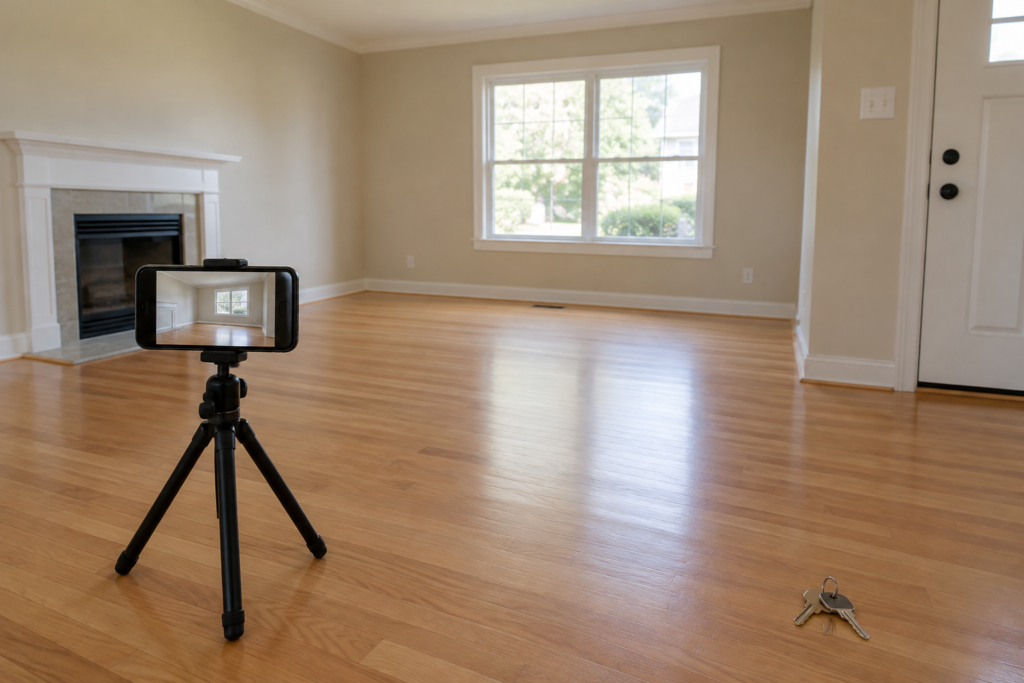
- Shoot a move-in video with the tenant in it, or on a call with them. Walk room by room: walls, floors, oven, fridge, under sinks, screens, blinds and both sides of every door. Say the date and address out loud at the start. If an agent or handyman does the walk, send a written shot list.
- Add a signed condition checklist. The tenant initials each room and notes existing damage within a few days. Store video, photos and checklist in one folder named by address and lease date.
- Put the move-out rules in writing early. When notice arrives, send a short letter: cleaning standard, key return, a written forwarding address (it starts the Texas clock), and how to book an inspection. California requires you to offer a pre-move-out inspection, where the tenant gets a list of problems to fix before leaving.
- Get someone on site within 24-48 hours of key return. Use your property manager, a handyman you’ve vetted, or a local inspector paid by the job. Same rooms, same order as the move-in video, before any cleaning or repairs.
- Compare the two videos side by side and tag each difference. Mark each item as “wear and tear,” “damage” or “unclear.” When in doubt, mark it “unclear” and leave it off the bill. A thin claim invites a dispute that costs more than the item.
- Price each damage item from a real invoice. Get one bid per item and keep the receipt. If the work isn’t finished by the deadline, send a good-faith estimate where your state allows it, then follow up with the final invoice. California gives you 14 days after the repair is completed.
- Put a deadline on your calendar the day notice arrives, then mail the statement and refund a week early, using a trackable method. Keep proof of mailing with the inspection files.
What it costs, roughly
Illustrative, not a quote: a local helper might charge $75-$150 for a 45-minute photo walk. On a $1,800 deposit, one disputed $400 deduction that you lose in Texas small-claims court on bad-faith grounds could cost you $100 plus 3 × $400 = $1,300, plus the tenant’s attorney’s fees. Budget the walk-through as a turnover cost in your repair reserve plan.
If you use a property manager
Ask: who shoots move-in and move-out media, and where is it stored? Who sends the deduction letter, and when? Can you review deductions over a set amount first? Vague answers are a reason to revisit how you hired them. Good move-in records pair with solid tenant screening. More checklists are in our resources and tools section, and the full self-management playbook is here.
Monday checklist
- Find your current tenant’s move-in photos. If you don’t have any, schedule a “maintenance check” walkthrough video now.
- Write down your state’s deposit deadline and notice method.
- Line up one local person who can do a 48-hour move-out walk.
This article is general educational information, not legal, tax or financial advice. Security-deposit rules differ by state and city and change over time. Check the current statute or a local attorney before deducting from a deposit. Statutes checked October 8, 2026. The featured image is an AI-generated illustration and does not show a real property.