The 2 a.m. Repair Call: A Remote Landlord’s Playbook for Leaks, Gas Smells and No-Heat Nights

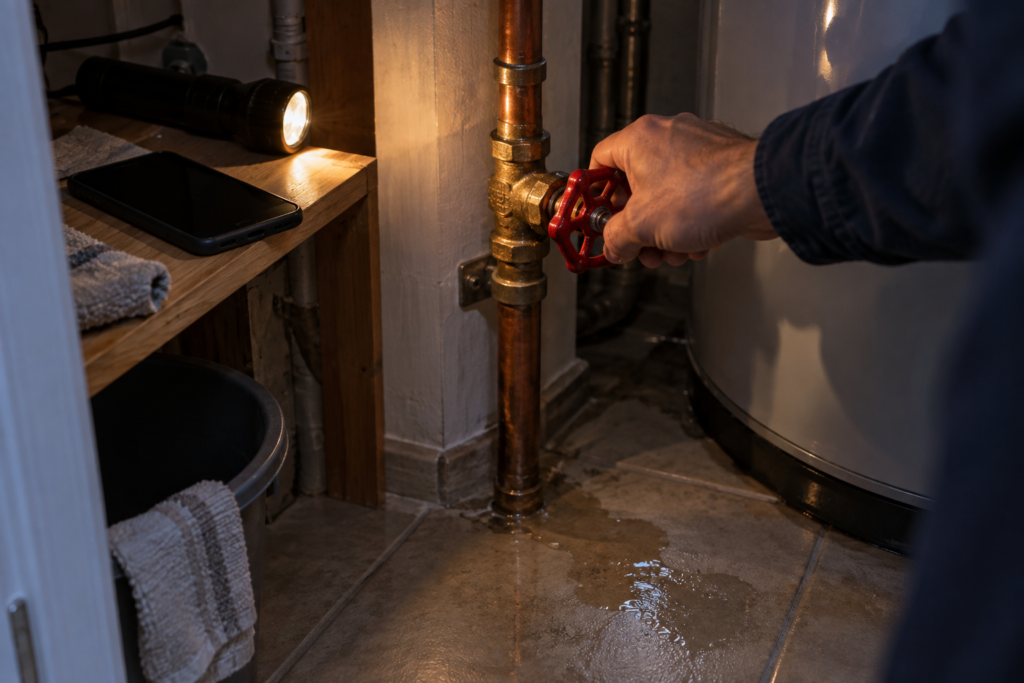
Your phone buzzes at 2:07 a.m. It’s your tenant, 900 miles away: “Water is coming through the kitchen ceiling.” What you do in the next ten minutes decides whether this costs a plumber’s visit or an insurance claim, a ruined weekend and an unhappy tenant.
Most small landlords who manage from another state make this plan in the middle of the emergency. This post helps you make it on a quiet Monday instead.
Why the first hour matters: three numbers
- Water is the expensive one. From 2019 to 2023, water damage and freezing caused 1.50 claims per 100 insured homes per year, and the average claim paid was $15,400, according to ISO data published by the Insurance Information Institute. (These figures are for owner-occupied homeowners policies, not landlord dwelling policies, but the plumbing behaves the same.)
- Mold starts on a clock. The EPA says water-damaged areas and items should be dried within 24 to 48 hours to prevent mold growth.
- “Life-threatening” means 24 hours. In HUD’s NSPIRE inspection standards, life-threatening deficiencies in public and HUD multifamily housing must be dealt with within 24 hours. That rule doesn’t reach most private single-family rentals, but it’s a useful benchmark for what counts as urgent.
Sort every call into one of four buckets
Interpretation, not fact: this triage is our suggested framework, not a legal standard. Write it down and share it with your tenant and whoever answers your phone.
- Call 911 first. You come second. Gas smell, fire, smoke, a carbon monoxide alarm going off, sparking outlets or wiring. The tenant should get out and call from outside. For gas, the federal pipeline safety agency (PHMSA) says to leave on foot right away, not to search for the leak, not to flip switches or start a car, and to call 911 and the gas company from a safe place. Your only job is to tell them to get out. Don’t troubleshoot over the phone.
- Tonight. Water that’s actively leaking, sewage backing up, no heat in freezing weather, a door or window that won’t lock. Shut off the source tonight and send someone out tonight.
- Within a few days. No hot water, a dead fridge, a toilet that won’t stop running when there’s a second bathroom. These are still serious. Texas, for example, puts hot water of at least 120°F on the same list as health and safety conditions (Tex. Prop. Code 92.052).
- Routine. A dripping faucet, a sticky closet door, a burned-out bulb. Log it and schedule it.
Your state sets the repair clock, not your lease
Every state has its own rules for how fast you have to fix problems that affect health or safety. Two examples:
- Texas: once a tenant gives proper notice of a condition that materially affects health or safety, the law presumes seven days is a reasonable time to fix it. That can be rebutted based on how severe the problem is and whether materials and labor are available (Tex. Prop. Code 92.056).
- California: if a landlord doesn’t fix conditions that make a unit untenantable within a reasonable time, the tenant can repair them and deduct up to one month’s rent, no more than twice in 12 months. A tenant who acts after 30 days is presumed to have waited long enough, and the statute allows shorter notice “if all the circumstances require” it (Cal. Civ. Code 1942).
A common mistake: believing that a slow-but-legal response is good enough. These deadlines are the outer limit before tenants get legal remedies. The water in your ceiling won’t wait seven days, and neither will the mold. Look up your own state’s statute, or ask a local attorney or property manager, before you need it.
The 2 a.m. script
- Safety question first: “Is anyone hurt? Do you smell gas or see smoke or sparks?” If yes, tell them to get out and call 911.
- Stop the source: walk the tenant to the shutoff, whether that’s the main water valve, the valve under the fixture, or the water heater’s cold-water valve. This works much better if you already sent them a photo of where it is.
- Protect electrics: if water is near outlets or the panel, tell them to stay clear and wait for a pro. Don’t coach someone through electrical work.
- Get photos and video right away, before cleanup starts. Your insurer will want them.
- Dispatch your first-call vendor, using an approval limit you set ahead of time.
- Follow up in writing the same night: what happened, who’s coming, and when. That message is your record.
What to set up this week (Monday checklist)
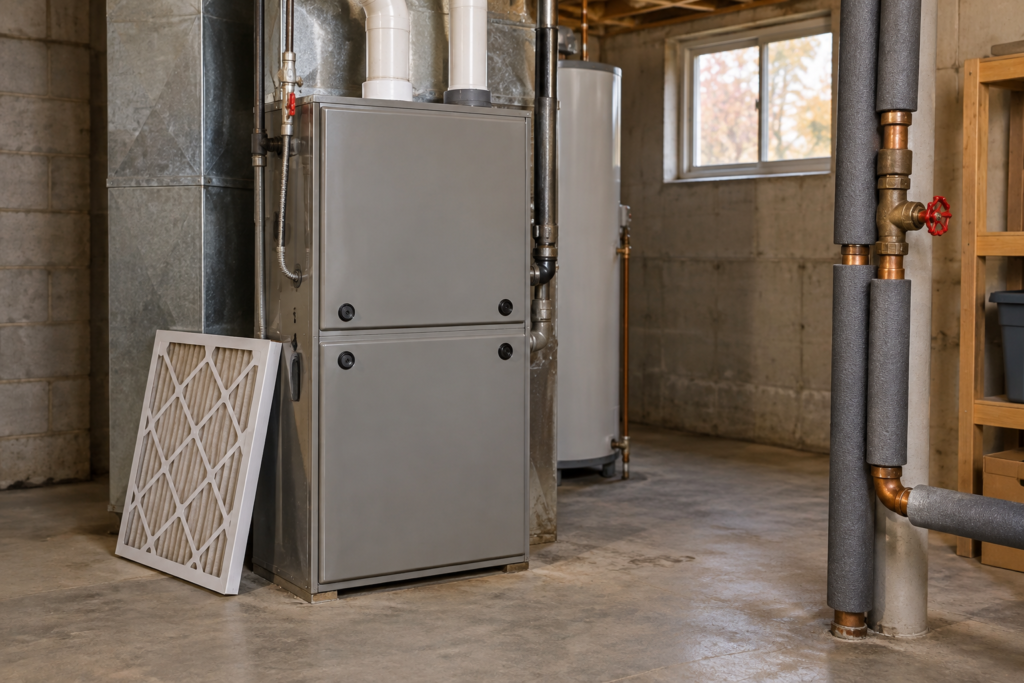
- Find and photograph every shutoff: main water, gas meter, electrical panel, water heater. Tag them, then put the photos in your lease packet and a shared folder.
- Build a three-deep vendor list for plumbing, HVAC, electrical, water restoration and locksmith. For each, ask whether they answer after hours and what an after-hours visit costs. Our guide to hiring a property management company covers the same vetting questions.
- Set a pre-approved emergency limit, written down, that your manager or handyman can spend without calling you. Example only: “Up to $750 to stop active damage, then call me.”
- Give tenants a one-page emergency sheet with the four buckets, your after-hours number, the shutoff photos, and “call 911 first” in bold.
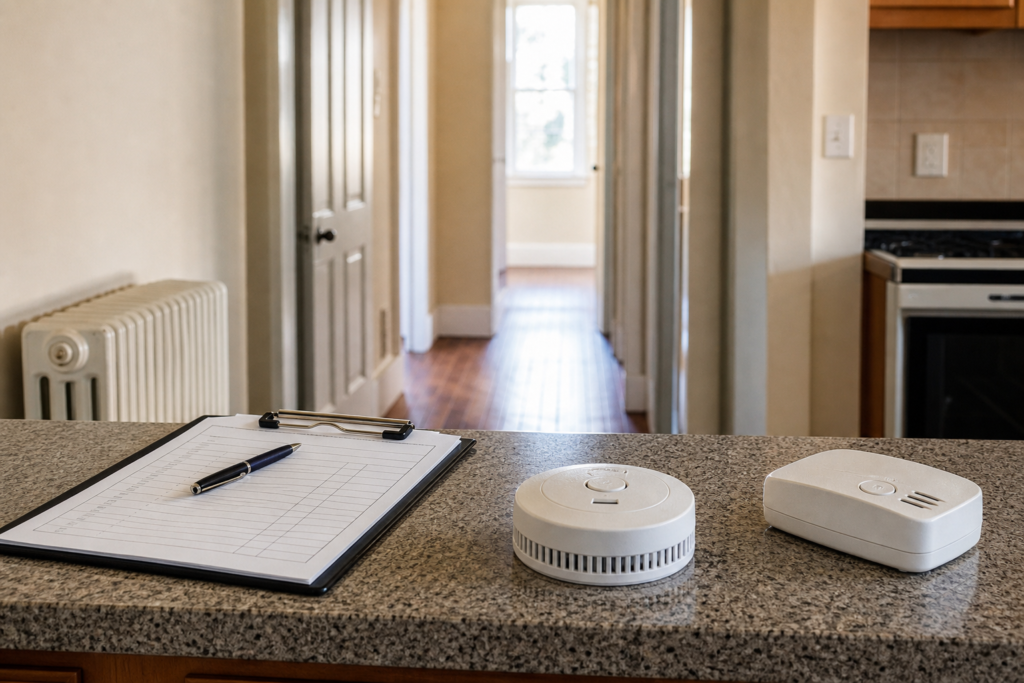
- Add cheap early warning: leak sensors under sinks and next to the water heater, and a thermostat that alerts you when the temperature drops. Our October winterizing checklist covers freeze protection.
- Read your policy’s water and vacancy terms and save your insurer’s claims number in your phone.
- Look up your state’s repair statute and note the timelines next to your vendor list.
If you’d rather never take the 2 a.m. call yourself, that’s a big reason to hire help. See how to manage an out-of-state rental by yourself and whether out-of-state investing fits you to decide where your line is.
This article is for general educational purposes only and is not legal, tax, insurance, financial or investment advice. Landlord-tenant laws vary by state and city and change over time; dollar figures are illustrative or drawn from the cited aggregate data, not quotes. For emergencies involving gas, fire, smoke or carbon monoxide, call 911. Consult a qualified local professional about your specific situation.
Related: Screening a tenant you’ll never meet: a remote landlord’s 8-step system