How Much to Set Aside for Repairs on One Out-of-State Rental: A Line-by-Line Reserve Plan

Most first-time out-of-state landlords budget for the mortgage, taxes, insurance and the property manager’s fee. Then a water heater fails in year two, the roof needs work in year four, and one bad month wipes out a year of cash flow. The fix is not a rule of thumb. It is a simple reserve plan built from the actual parts of your house and how old they are.
This guide walks through that plan for a single-family rental, with real survey numbers and a worked example you can copy.
Two buckets, not one
Split your “repairs” money into two separate buckets:
- Routine repairs and maintenance — the clogged drain, the broken garbage disposal, the furnace tune-up, the leaky faucet. These happen every year and vary a lot.
- Capital expenses (capex) — big items that wear out on a fairly predictable clock: roof, furnace, air conditioner, water heater, appliances, flooring.
Routine repairs come out of monthly cash flow. Capex needs a savings account that fills up slowly before the item fails.
What owners of single-family rentals actually spend on repairs
Fact: The Census Bureau and HUD’s 2024 Rental Housing Finance Survey asks owners what they spent to run their property for a year. In our own weighted tabulation of the public-use file, limited to single-unit rental properties that reported repair and maintenance costs:
- About 9 in 10 spent something on repairs and maintenance during the year.
- Among those, the median was $2,000.
- One in four spent $4,500 or more, and one in ten spent $8,900 or more.
This is a small sample (154 properties), so treat the figures as a rough guide, not a precise national average. Still, the spread is the lesson: a “normal” year is around $2,000, and a bad year can be four times that.
How long the big items last
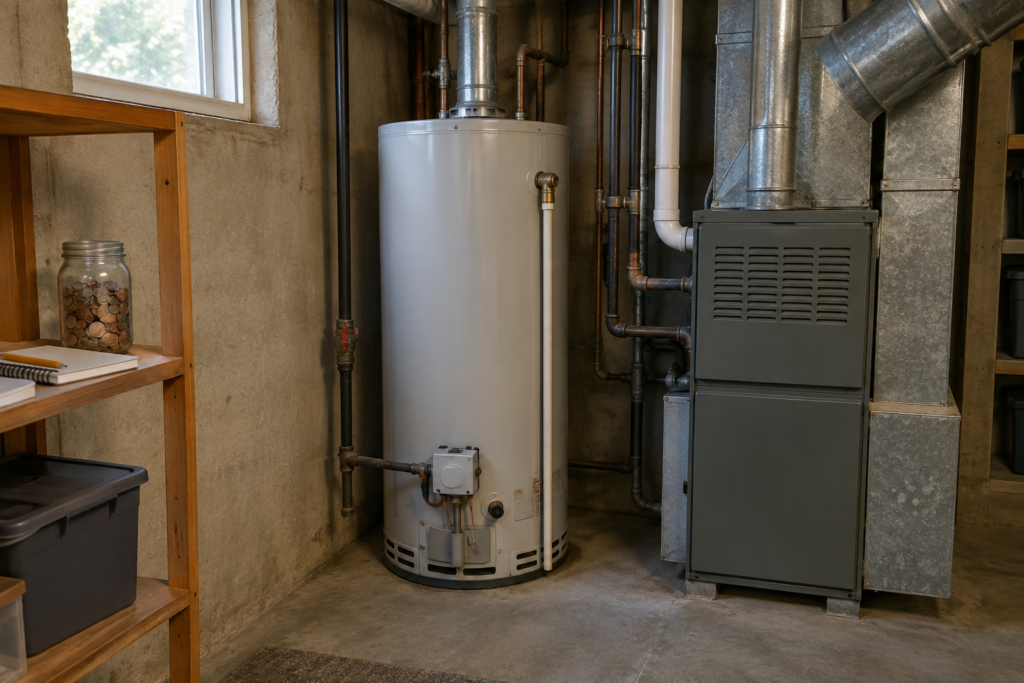
Fact: The National Association of Home Builders’ Study of Life Expectancy of Home Components (2007, so treat it as a ballpark) lists typical lifespans of about 20 years for asphalt shingle roofs, 10–11 years for gas or electric tank water heaters, 15–20 years for furnaces, 10–15 years for air conditioners, 9 years for dishwashers, 13 years for refrigerators and 8–10 years for carpet. ENERGY STAR’s replacement guidance says to consider replacing an air conditioner or heat pump older than 10 years and a furnace or boiler older than 15.
What the big items cost
Fact: The 2023 American Housing Survey reports these median homeowner spending figures per project (2021–2023): roofing $10,000, HVAC $5,500, kitchen remodels $8,000, flooring $3,000, doors and windows $2,800, and water heater/dishwasher/disposal $800.
Interpretation, not fact: These are medians for homeowners, and they include partial jobs and do-it-yourself work (the same survey says 36% of projects were DIY). A remote landlord paying a contractor for a full replacement should plan for more than the median. That is why the example below uses higher numbers.
A worked example: one 25-year-old, 3-bedroom house
Divide each item’s replacement cost by its lifespan to get a monthly set-aside. Costs below are illustrative, not quotes — replace them with local bids.
| Item | Illustrative cost | Lifespan used | Per month |
|---|---|---|---|
| Asphalt roof | $12,000 | 20 yrs | $50 |
| Furnace | $5,500 | 15 yrs | $31 |
| Central AC | $5,500 | 12 yrs | $38 |
| Tank water heater (installed) | $1,800 | 10 yrs | $15 |
| Appliances (fridge, range, dishwasher) | $3,000 | 11 yrs | $23 |
| Flooring and full paint | $4,500 | 8 yrs | $47 |
| Windows, doors, exterior, driveway | $6,000 | 25 yrs | $20 |
| Total capex reserve | about $224 |
Add routine repairs. Using the survey’s $2,000 median works out to about $167 a month. Together, that is roughly $390 a month, or about $4,700 a year, for this one house. On a house renting for $1,800, that is more than a fifth of the rent — far more than many pro formas assume.
Adjust for age: the step most people skip
A monthly set-aside assumes every item is brand new. Yours probably are not. If the water heater is already 11 years old, it is not “$15 a month” — it is “$1,800 sometime soon.” So:
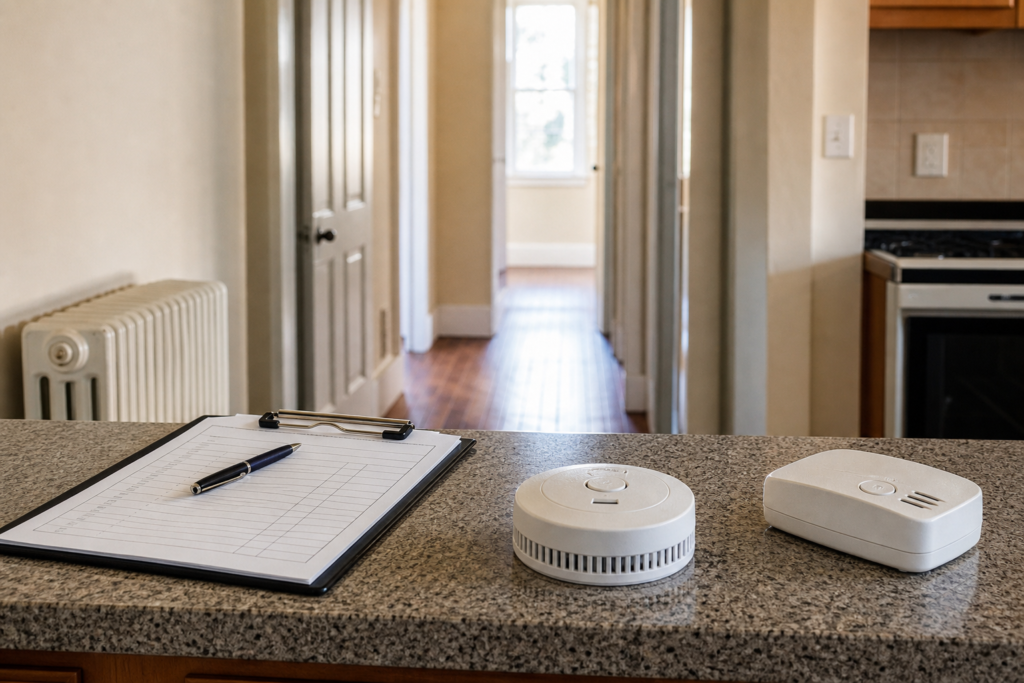
- Find the age of each big item. The home inspection report usually lists them. If not, ask your manager or handyman to photograph the data plate on the furnace, AC condenser and water heater; the manufacture date is often coded in the serial number.
- Flag anything at or past its lifespan. Fund that full replacement cost up front, or plan to.
- Keep a starting cushion. Interpretation: a common, conservative approach is to hold at least the cost of your single most expensive likely failure (often the HVAC system or roof) before you close, on top of normal reserves.
Why this matters more when you live far away
Interpretation, not fact: Remote owners pay a “distance premium.” You can’t shop three bids in person, emergency calls cost more, and a failure during a vacancy can go unnoticed. Insurance generally pays for sudden damage, not equipment that simply wore out — check your own policy wording. A funded reserve lets you say yes to the right fix quickly instead of the cheapest patch. See our 2 a.m. repair-call playbook for how to handle the urgent ones.
Your Monday checklist
- Open a separate savings account just for this property’s reserves.
- List the seven big items above with their age and a local replacement estimate.
- Calculate your monthly capex number and set an automatic transfer on rent day.
- Add a routine-repair line of at least $150–$200 a month for one house.
- Ask your manager for photos of every equipment data plate and a yearly condition report (our guide on hiring a property management company covers what to ask for).
- Do the seasonal maintenance that stretches lifespans — start with our October checklist.
- Re-run the numbers every January and before you buy the next property. Our calculators and tools can help, and is out-of-state investing for you? walks through the bigger picture.
This article is for general educational purposes only and is not financial, tax, legal or investment advice. Costs and lifespans vary by property, climate and market; get local bids and consult qualified professionals before making decisions. Survey figures are Remote Real Estate’s own tabulation of Census Bureau public-use data and are subject to sampling error.