Tenant Running Space Heaters? Why That’s Not a Heat Fix, and a 7-Step Plan for Out-of-State Landlords

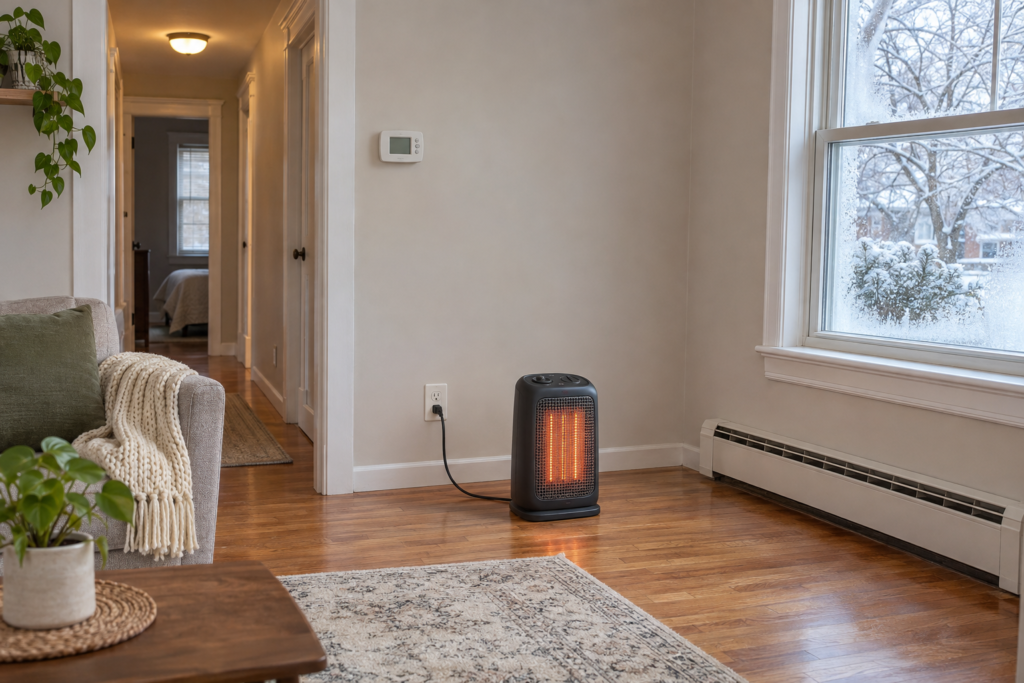
It’s the second cold week of the season and your tenant texts: “The heat isn’t really keeping up, so we bought a couple of space heaters.” It sounds like the problem solved itself. For an owner 1,000 miles away, it’s actually two problems: a heating system that may not meet local code, and a fire risk you can’t see. Here’s what the rules and the fire data say, and a 7-step plan you can run from your phone.
What the data says about space heaters
In the National Fire Protection Association’s most recent detailed breakdown of home heating fires (2016–2020 annual averages), fixed or portable space heaters were involved in about 33% of home heating fires but 88% of the deaths from those fires (NFPA, Home Heating Fires supporting tables, Table 1). The U.S. Fire Administration reports a similar pattern for portable heaters specifically: about 3% of home heating fires but 41% of fatal ones in 2017–2019 (USFA).
The Consumer Product Safety Commission estimates portable heaters were involved in an average of 1,600 fires, 70 deaths and 150 injuries a year from 2020 to 2022. Its standing advice: keep heaters at least 3 feet from anything that can burn, turn them off when sleeping, and plug electric heaters directly into a wall outlet, never an extension cord or power strip (CPSC, January 2026; CPSC Publication 098). CPSC also says to stop using an outlet if the plug fits loosely or the faceplate gets hot, which is often the first sign of a wiring problem you’d want to know about.
The misconception: “If they have a space heater, the heat issue is handled”
In many places, a space heater does not count as heat. The International Property Maintenance Code, adopted with local changes by many cities, requires dwellings to have heating capable of keeping habitable rooms, bathrooms and toilet rooms at 68°F, and says portable space heaters can’t be used to achieve compliance (IPMC Section 602). Chicago’s Heat Ordinance says the same thing in plain words: cooking appliances, water heaters and portable space heaters can’t be used to meet the minimum (City of Chicago).
Some examples of what “enough heat” means in practice:
- New York City: October 1–May 31, at least 68°F inside from 6 a.m. to 10 p.m. when it’s below 55°F outside, and at least 62°F overnight regardless of outdoor temperature (NYC HPD).
- Chicago: September 15–June 1. Where the landlord controls central heat, 68°F daytime and 66°F overnight; where the tenant has their own furnace, the landlord must keep that equipment in good operating condition. Fines run $500–$1,000 per day, per violation (City of Chicago).
- California: rentals must have heating that can keep habitable rooms at 70°F, measured 3 feet above the floor, and unvented fuel-burning heaters aren’t allowed (25 CCR § 34). Heating that isn’t kept in good working order can make a unit “untenantable” (Cal. Civ. Code § 1941.1).
- Texas: there’s no statewide indoor temperature rule, but city ordinances (Dallas and Houston, for example) can set one, and the landlord repair duty covers conditions that materially affect an ordinary tenant’s health or safety (Texas State Law Library; Tex. Prop. Code § 92.052).
Interpretation, not fact: even where no code sets a number, a tenant running two heaters to stay warm is telling you something. It could be a dirty filter, a failing furnace part, a heat pump struggling in a cold snap, or drafty windows. Every one of those is cheaper to fix in November than in a January emergency.
A 7-step remote plan for a “heat isn’t keeping up” text
- Reply within hours and ask three questions: What does the thermostat say it’s set to? What does it read? Which rooms are cold? Ask for a photo of the thermostat and the furnace filter.
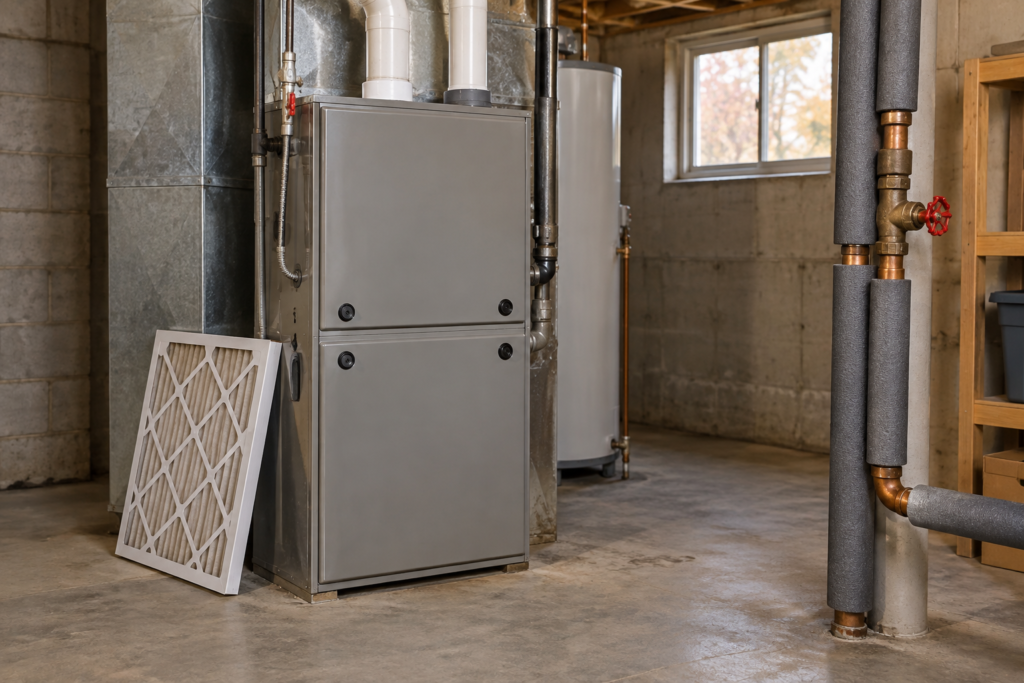
- Rule out the easy fixes by phone. Thermostat batteries, the setting (heat, not cool or fan), a tripped breaker, a closed vent, or a clogged filter. If the filter is gray, ask the tenant to swap it (keep a few in the unit) or reimburse them.
- If it isn’t fixed the same day, send a licensed HVAC tech. Ask for a written report with photos, the equipment’s age, and a quote before any repair over your preset limit. Our contractor vetting guide covers how to pick one you’ve never met.
- Look up your city’s heat rule. Search “[city] minimum heat rental” or call 311. Note the season dates and temperatures in your property file so the next call is faster.
- Send a short space-heater safety note, friendly, not a lecture: 3 feet of clearance, plug straight into the wall, no extension cords or power strips, off when sleeping or out. Link CPSC’s tips. If the tenant mentions a hot or loose outlet, treat it as an electrical repair.
- If heat is truly out, provide temporary heat and document it. Temporary heaters can bridge a day or two while parts arrive, but log the dates, the repair timeline and every message. Our 2 a.m. repair call playbook walks through the no-heat night.
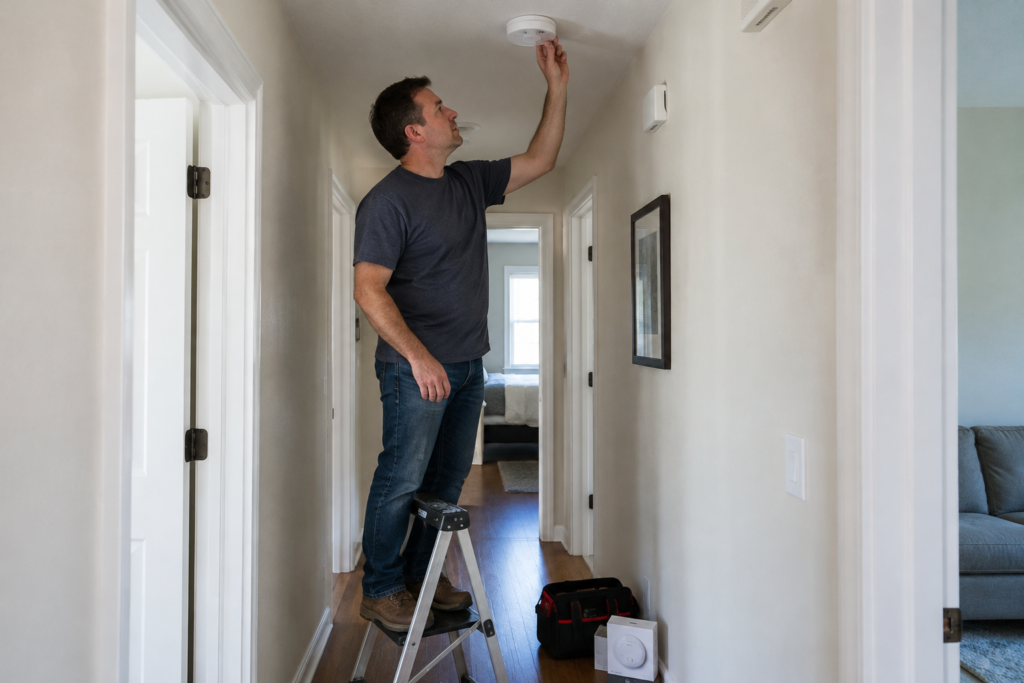
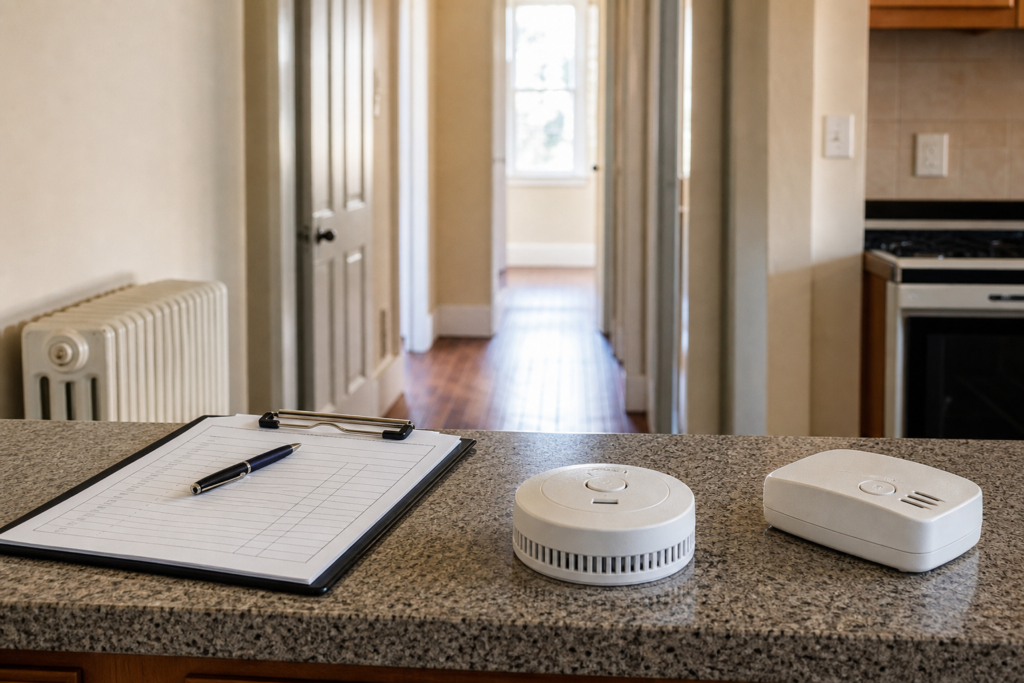
- Close the loop and fix the cause. Confirm the rooms reach temperature, then decide on bigger fixes (an aging furnace, weatherstripping, insulation) using your repair reserve. Ask the tenant to test the smoke and CO alarms while you’re talking about heat.
What it costs
An HVAC diagnostic visit commonly runs in the low hundreds of dollars, and a basic electric space heater costs about as much as a dinner out. Those are illustrative figures, not quotes; prices vary a lot by market and season. Compare either one to a code violation, a frozen pipe, or a fire claim. If you’d rather not handle these calls yourself, it’s one of the first tasks worth handing to a property manager. For the fall prep that heads most of this off, see our winter checklist.
This article is for general education only and is not legal, tax, insurance, financial or investment advice. Heat rules vary by state, county and city and can change; check your local code and talk to a qualified professional about your property. The featured image is an AI-generated illustration, not a photo of a specific property.