Fireplace at Your Out-of-State Rental? A 7-Step Chimney Plan Before Tenants Light the First Holiday Fire

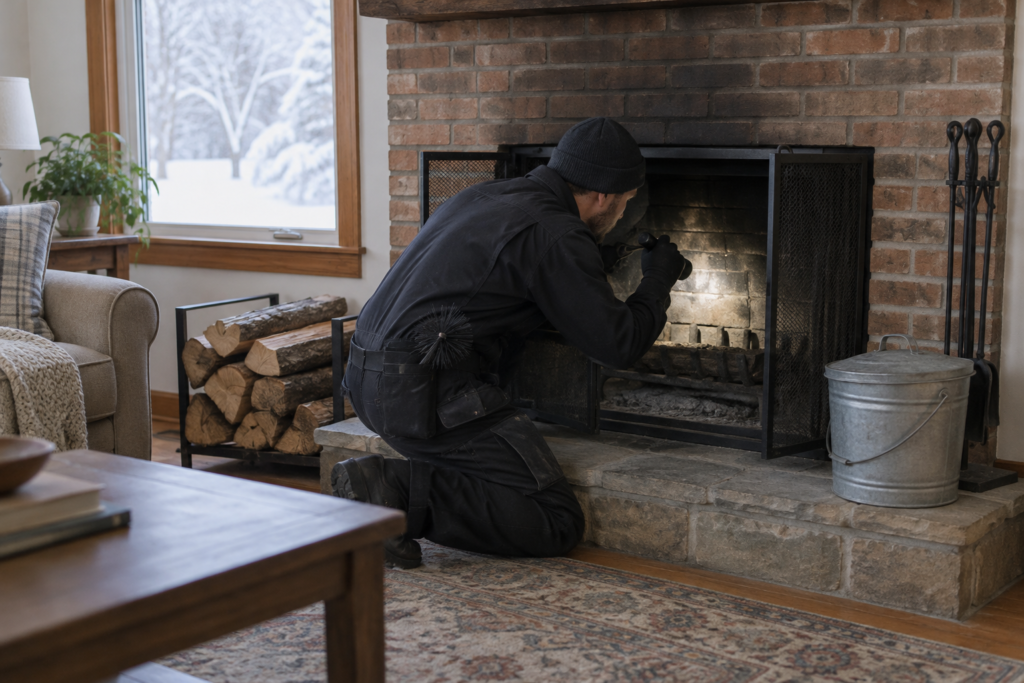
Thanksgiving week is when a lot of tenants light their first fire of the season. If your out-of-state rental has a wood-burning fireplace or a wood stove, that first fire is landing on a chimney you probably haven’t looked at since you bought the place. Here is what the data says and a seven-step plan you can finish from your laptop this week.
What the numbers say
NFPA’s home heating fire tables (2016-2020 annual averages) count about 3,010 fireplace or chimney fires a year that spread beyond the chimney. They caused about 30 deaths and $234 million in direct property damage, 22% of all heating-fire losses. On top of that came roughly 13,120 fires that stayed inside a chimney or flue. December, January and February together account for 46% of home heating fires (NFPA, Home Heating Fires: Supporting Tables).
The national standard is simple. NFPA 211, as quoted by the Chimney Safety Institute of America, says chimneys, fireplaces and vents “shall be inspected at least once a year,” and cleaned or repaired if needed. The U.S. Fire Administration gives the same advice to households: annual professional inspection and cleaning, nothing burnable within 3 feet, and cooled ashes in a lidded metal can kept at least 10 feet from the house (USFA fireplace and wood stove safety card; USFA winter fires). Whether NFPA 211 is legally binding at your property depends on what your state or city has adopted.
The misconception: “If the tenant lights the fire, the chimney is their problem”
A tenant controls what goes in the firebox. The chimney itself is part of the building. In Texas, for example, a landlord must make a diligent effort to repair a condition that “materially affects the physical health or safety of an ordinary tenant” once the tenant gives notice and is current on rent (Tex. Prop. Code 92.052). Interpretation, not fact: a cracked flue liner or a chimney packed with creosote is the kind of condition that rule is aimed at. Most other states have similar repair duties.
Insurance won’t fill the gap. Fire is a covered peril on a typical landlord (DP-3) policy (ISO DP 00 03 form). But Washington’s insurance commissioner notes that policies cover sudden accidents, not “ongoing issues like chimney maintenance,” and excludes neglect: you’re expected to maintain your heating systems (WA OIC). The sweep bill is yours either way.
Know which inspection you’re buying
CSIA describes three inspection levels under NFPA 211 (CSIA levels of inspection):
- Level 1: the minimum for a chimney used the same way as before. The sweep checks the readily accessible parts inside and out for soundness, blockages and deposits.
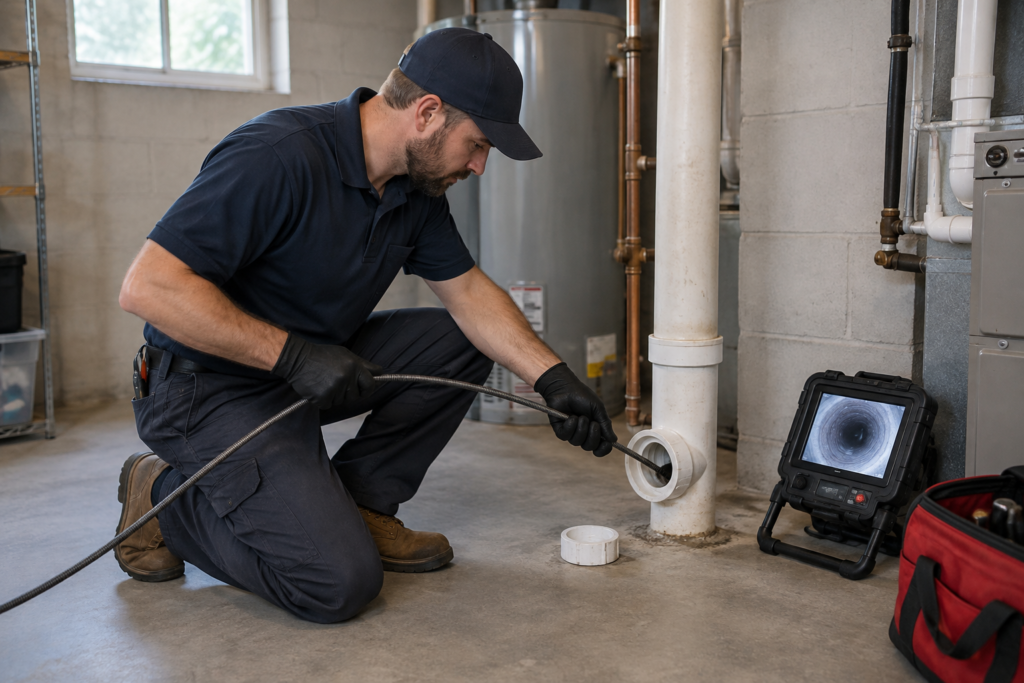
- Level 2: needed after a change (a new insert, a switch from wood to gas, relining), after a chimney fire, storm or earthquake, and upon the sale or transfer of a property. It usually includes a camera scan of the flue.
- Level 3: only when a hidden, serious hazard is suspected and parts of the structure must be opened up.
If you bought in the last year and nobody ran a Level 2, that’s your gap. A general home inspector’s “fireplace looks functional” is not a flue camera scan.
Wet wood and local burn bans
Tenants often burn whatever wood they can find. EPA’s Burn Wise program says wood burns best at 15-20% moisture. Wetter wood makes more smoke and more creosote, the tar that causes chimney fires. Seasoning takes 6-12 months of splitting, stacking and covering, and a moisture meter costs about $15-40 (EPA Burn Wise moisture meter sheet).
Some areas also limit burning. In the San Francisco Bay Area it is illegal to burn wood, fire logs or pellets on Spare the Air alert days. A first offense means a class or a $100 ticket, a second $500. Any chimney or remodel project over $15,000 that needs a permit may only install gas, electric or EPA-certified devices (Bay Area Air District wood burning rule). Check your county’s air district before you budget a chimney rebuild.
Your 7-step fireplace plan
- Find out what you have. Ask the tenant or your manager for two photos: the firebox and the chimney top. Masonry, prefab metal, insert, wood stove or gas logs each have different needs.
- Book a certified sweep before the next fire. Ask for a Level 1 inspection with photos, or a Level 2 if you bought recently, replaced anything or the chimney has never been checked. Use your contractor vetting checklist: license where required, insurance and a written report.
- Tell the tenant “no fires” until it’s cleared. Put it in a short text and email. Don’t let the first burn of the season be the test.
- Put the rules in writing. A one-page fireplace addendum: dry, seasoned wood only; no trash, paper or wrapping paper; screen closed; ashes in the metal can, outside, 10 feet from the house; follow local burn bans; report smoke backing up into the room right away. Leave a lidded metal ash can at the property.
- Check the alarms. A fireplace means you need working smoke and carbon monoxide alarms nearby. California, for example, requires CO devices in homes with a fireplace. See our smoke and CO alarm guide.
- Decide whether to keep it wood-burning. If repairs are big, the options are repair, a gas insert or closing it off for good. Converting means a Level 2 inspection, and a decorative-only fireplace should be sealed and stated in the lease. Fund repairs from your capex reserve.
- Put it on the calendar. Add “chimney inspection” to your fall winter checklist and to every turnover, and keep the sweep’s report with your insurance records.
Illustrative, not a quote: a routine inspection and sweep often runs a few hundred dollars. Relining a damaged flue or rebuilding a chimney crown can run into the thousands. The sweep’s photos either confirm you’re fine or tell you exactly what to fix before it turns into a claim.
More: our guides on heat complaints and space heaters, managing an out-of-state rental yourself and our resources and tools page.
This article is general educational information, not legal, tax, financial, insurance or investment advice. Laws, codes and policies vary by state, city and insurer and change over time. Check the current rules for your property and talk to a qualified professional about your situation. The featured image is an AI-generated illustration, not a specific property.