Tenant Wants a Smart Lock, Doorbell Camera or Satellite Dish? A 7-Step Approval Plan for Out-of-State Landlords

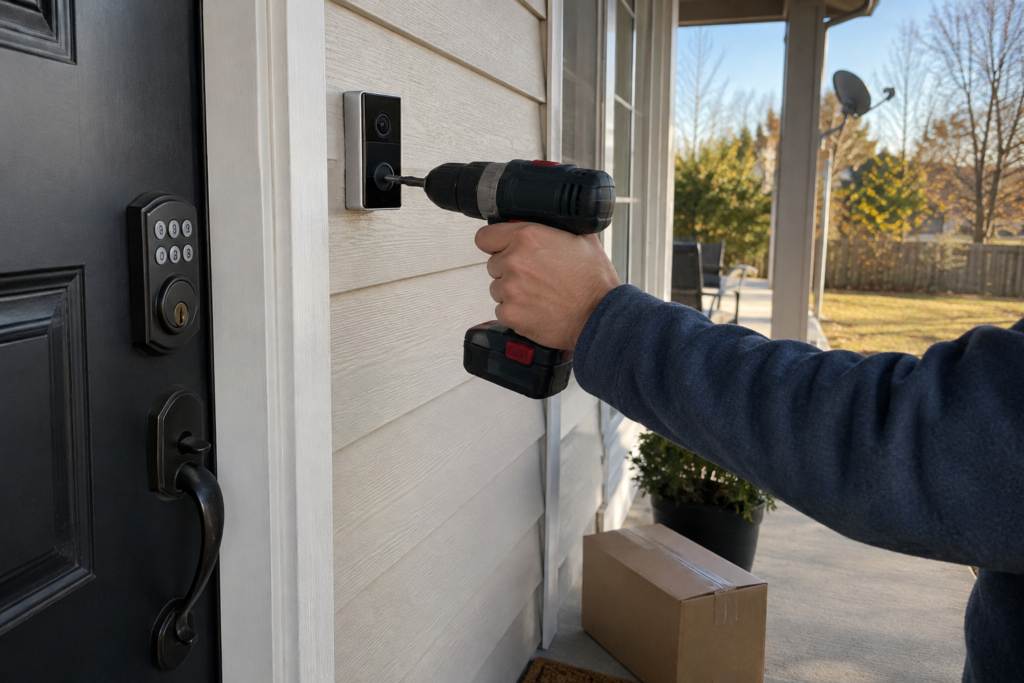
It’s the week of Black Friday and Cyber Monday, and plenty of tenants are about to unbox a video doorbell, a keypad smart lock, a TV mount or a satellite dish. Then comes the text: “Is it OK if I put this up?” Or nobody asks, and you find out at the next inspection.
From another state, you can’t swing by to look at the wall. You need a repeatable way to say yes, no, or “yes, with conditions.” Here’s what the rules say, plus a 7-step plan.
The misconception: “My lease says no alterations, so the answer is always no”
For most cosmetic requests, your no-alterations clause lets you decide. But federal and state rules override it in a few situations. Here are the three most likely to hit a small landlord.
1. Satellite dishes and TV antennas: the FCC rule
Fact: The FCC’s Over-the-Air Reception Devices (OTARD) rule, 47 CFR 1.4000, bars lease provisions that “impair” a renter’s installation of a satellite dish one meter (about 39 inches) or less in diameter, a TV antenna, or certain fixed wireless antennas on property within the tenant’s “exclusive use or control.”
The FCC’s consumer guide explains the limits. For rentals, the rule covers exclusive-use areas such as balconies, patios and terraces. It does not cover common areas owned by the landlord, and the guide gives “the roof or exterior walls of a multiple dwelling unit” as examples. It also says requiring approval before installation is prohibited “in most cases,” while reasonable restrictions that prevent damage to leased property (such as not damaging a balcony floor) and safety rules (such as fastening a dish securely) are generally allowed.
Interpretation, not fact: A single-family tenant likely has a stronger claim to the yard, deck or patio than an apartment tenant has to a shared roof. Answer a dish request with conditions, not a flat “no”: no roof penetrations without your roofer, cables sealed against water, and the mount secured.
2. Grab bars, ramps and other disability-related changes
Fact: Under the federal Fair Housing Act, a housing provider must allow reasonable modifications a tenant with a disability needs. The tenant pays for them. HUD and DOJ say this in their 2008 Joint Statement on Reasonable Modifications, which lists grab bars, ramps and wider doorways as typical examples. The tenant needs your approval first. But if the request meets the law’s requirements, you can’t deny it. You may ask for a description of the work, require building permits, and require that the work be done in a workmanlike manner. Where it’s reasonable, you may ask the tenant to restore the interior at move-out, but not exterior or common-area changes.
A request can arrive by text, not on your form; it still counts. Some very small landlords are exempt from parts of the federal law, but state and local fair housing laws often still apply.
3. EV chargers in California (and why most small rentals are exempt)
Fact: California Civil Code 1947.6 requires a landlord to approve a tenant’s written request to install an EV charging station at the tenant’s assigned parking space for leases signed, extended or renewed since July 1, 2015. The tenant pays for installation, electricity and removal, and must carry liability coverage unless the charger is lab-certified and installed by a licensed electrician. The duty does not apply where there are fewer than five parking spaces, where parking isn’t part of the lease, or where chargers already serve at least 10% of spaces (leginfo text).
Interpretation: A single-family house or duplex with a two-car garage will usually fall under the five-space exemption. A charger can still be worth a “yes, with my electrician” if it keeps a good tenant.
Smart locks and doorbell cameras: your lease decides, but state lock laws still apply
No federal rule gives tenants a smart-lock right, but some states set minimum lock hardware. Texas Property Code 92.153 requires, at the landlord’s expense, a keyless bolting device and a door viewer on each exterior door, plus a doorknob lock or keyed deadbolt and sliding-door locks. Under 92.157, a tenant can make the landlord install a keyed deadbolt where one is missing, at the tenant’s cost. 92.164 sets tenant remedies, including a civil penalty of one month’s rent plus $500 in some cases. California Civil Code 1941.3 requires deadbolts on main entry doors and window locks on openable windows.
Interpretation: A tenant-installed smart lock shouldn’t replace required hardware, and you still need a way in for repairs and emergencies. Approve one only if the required deadbolt function stays, you or your manager get a working code or key, and original hardware returns (or codes are wiped) at move-out. In Texas, also remember the 92.156 duty to rekey within 7 days after a tenant turns over. Treat smart-lock codes the same way.
Your 7-step approval plan
- Put an “ask first” clause in writing. Require written approval for anything mounted, drilled, wired or plumbed, noting the legal exceptions (antennas, disability modifications).
- Ask for three things with every request: a product link, a photo of the exact spot, and who will install it.
- Sort the request: legally protected (dish or antenna in an exclusive-use area, disability modification, CA EV charger at 5+ spaces), lock or safety hardware, or purely cosmetic (TV mount, shelves, paint).
- Answer with conditions, not just yes or no. Examples: licensed electrician for anything hardwired; your roofer for any roof attachment; stud-mounted TV brackets only; cameras pointed at the tenant’s own entry, not a neighbor’s windows.
- Keep your access. Get the code or key for any lock change within 24 hours of installation, and write it into the approval.
- Agree on move-out before install. Decide in writing what stays, what comes off, and who patches holes; compare against your move-out inspection photos.
- Check it on your next visit. Add a “tenant additions” line to your mid-lease inspection checklist, and handle locks and codes during turnover.
Illustrative, not a quote: patching and painting three TV-mount holes can cost a handyman visit of $150 to $300. A dish lag-bolted through roof shingles can lead to a leak that costs far more. A five-minute approval text is cheap insurance.
More: our guides on managing an out-of-state rental yourself and our resources and tools page.
This article is general educational information, not legal, tax, financial or investment advice. Laws vary by state and city and change over time. Check the current rules for your property and talk to a qualified professional about your situation. The featured image is an AI-generated illustration, not a specific property.