Holiday Grease, Clogged Drains and Sewer Backups: Who Pays at Your Rental, and a 7-Step Plan


Next Thursday, your tenant may cook the biggest meal of the year in your rental’s kitchen. Gravy goes down the sink, peels go into the disposal, and by Friday a basement floor drain can start backing up. You’re 1,000 miles away, and nobody knows yet who pays.
Here’s what the rules say, what a typical landlord policy covers, and a seven-step plan for before the holiday.
Why grease turns into a Friday plumbing call
The Sewerage & Water Board of New Orleans explains it plainly: grease poured down the sink sticks to the inside of pipes, both on your property and under the street. Over time it can block the whole pipe, and the result is a backup of raw sewage into the home or yard. It adds that a garbage disposal doesn’t stop grease, and some “grease dissolving” products just move the clog further down the line.
Clogs aren’t the only cause. The EPA lists blockages, line breaks, sewer defects that let stormwater in, power failures and poor design as causes of sewer overflows. So water coming up a drain can be the tenant’s grease, roots in your pipe, or the city’s main line.
The pipe you probably own (and didn’t know about)
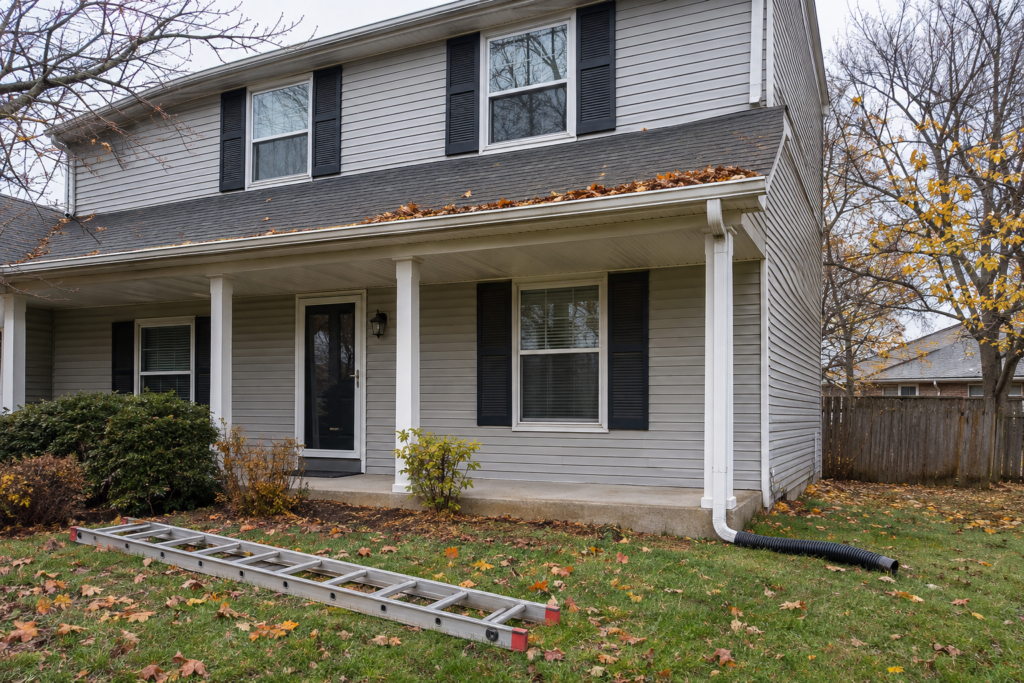
Most owners assume the city handles everything past the house. Often it doesn’t. Fresno, California, says the property owner must maintain and repair the sewer lateral, the pipe from the house to the public main, including the part under the sidewalk and street. Ogden, Utah, says the same. Some cities split it differently, so check your city’s sewer page.
Interpretation, not fact: if roots or a sag in that lateral cause the backup, it’s most likely your repair, not the tenant’s and not the city’s, whatever caused the last clog.
Who pays: tenant clog or building problem?
State landlord-tenant laws usually make the landlord keep the plumbing working and make the tenant use it properly. A few examples:
- California: a home is untenantable if its plumbing isn’t kept in good working order and connected to an approved sewage system (Civ. Code 1941.1). Tenants must properly use the plumbing fixtures (Civ. Code 1941.2).
- Florida: where no local code applies, the landlord must keep the plumbing in reasonable working condition, and that duty can be changed in writing for a single-family home or duplex (83.51). Tenants must keep plumbing fixtures clean and use them reasonably (83.52).
- Texas: the landlord does not have to repair a condition caused by the tenant, an occupant, family member or guest, other than normal wear and tear (Prop. Code 92.052).
- Washington: tenants must properly use the plumbing and fixtures the landlord supplies and not damage them on purpose or by negligence (RCW 59.18.130).
Interpretation, not fact: these rules work in your favor only if you can show what caused the clog. “Grease blockage in kitchen line” and “roots at 40 feet” lead to very different bills.
The common misconception: “My landlord policy covers water damage”
It covers some water damage. A sewer backup usually isn’t part of that. The standard ISO dwelling form (DP 00 03) excludes water that “backs up through sewers or drains” and water that overflows from a sump or sump pump. The Insurance Information Institute says some policies cover sewer and drain backups but many don’t, and that you can buy a sewer backup rider. It also suggests a backwater valve, which lets sewage flow out but not back in.
Flood insurance won’t fill the gap either, unless there’s an actual flood. FloodSmart says an NFIP policy would cover a sewer backup caused by flooding during a heavy rainstorm, but not one caused by clogged pipes.
What it can cost
An illustrative example, not a quote: a tenant-caused kitchen clog cleared by a plumber might run $150-$350. A camera inspection of the lateral could add $200-$500. If roots have broken the pipe, a spot repair or a new lateral can run into the thousands, and cleanup after sewage reaches a finished basement can cost far more. Get local quotes.
Your 7-step drain and sewer plan before the holidays
- Send a short holiday note this week. No grease or gravy down the sink or disposal (cool it, then trash it), scrape plates into the trash, and call right away if a drain gurgles or backs up.
- Find the cleanout and the main shutoff. Ask your handyman or manager to photograph the sewer cleanout cap and the water shutoff, and to label both.
- Pre-book a plumber for the holiday weekend. Confirm who answers Friday and Saturday, and the after-hours rate. Add them to your 2 a.m. repair call playbook.
- Require a written cause on every drain call. Ask for the location of the blockage, what it was (grease, wipes, roots, broken pipe) and photos or camera video. That note decides whether you bill the tenant, file a claim or fix the lateral.
- Check your policy for a backup endorsement. Ask your agent: “Does this dwelling policy cover water that backs up through sewers or drains, and up to what limit?” If not, ask what the rider costs. Our landlord insurance checklist has more questions to ask.
- Scope the lateral on older houses with big trees. A camera inspection before roots cause a backup is cheaper than an emergency dig. Put a future lateral repair into your capex reserve, and ask about a backwater valve if the house has a basement bathroom or floor drain.
- Bill tenant-caused clogs fairly and with paper. If the plumber’s note shows misuse, send the tenant the invoice and the note, following your lease and state law. If it’s roots, age or the city main, it’s on you or the utility. Don’t charge the tenant for those.
The bottom line
You can’t watch the sink from another state. You can send a reminder, keep a plumber on call, get a written cause for every clog and close the insurance gap before the holiday. For more remote-owner basics, see how to manage out-of-state real estate by yourself, our handyman vetting guide and yesterday’s umbrella insurance check.
This article is for general educational purposes only and is not legal, tax, insurance, or financial advice. Laws, local sewer rules and policy wording vary by state, city and insurer, so check your own lease, policy and local rules, or talk to a qualified professional. Cost figures are illustrative, not quotes. The featured image was generated with AI and does not show a real property or person.