Gutters, Leaves and Ice Dams at Your Out-of-State Rental: Who Cleans, What Insurance Covers, and a 7-Step Plan

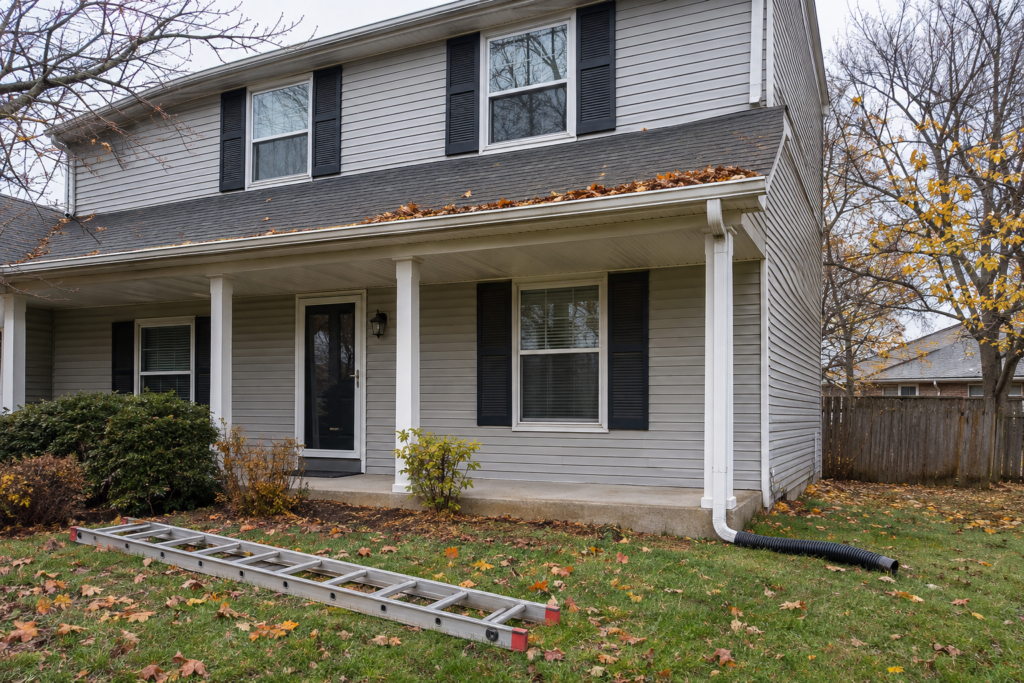
Late fall is when an out-of-state rental quietly fills its gutters. Leaves drop, the downspouts plug, and nobody notices until water pours over the edge onto the front steps, soaks the foundation, or freezes into an ice dam that pushes melt water under the shingles. Here is who is usually responsible, what a typical landlord policy says, and a seven-step plan you can set up this month.
Why a clogged gutter becomes a ceiling stain
Gutters have one job: move roof water away from the house. Delaware’s environmental agency says to clean them about twice a year, in spring and early fall, and any time they clog. It also says to point downspouts away from the house, because clogged gutters can dump water by basement windows and along the foundation. If there are trees nearby, it suggests gutter guards.
Winter adds ice dams. The University of Minnesota Extension explains that they form when heat escaping from the house melts snow on the upper roof. The water runs down to the colder edge and refreezes. Melt water then backs up behind the ice, finds gaps in the roofing, and leaks into the attic, walls and ceilings. Its long-term fix is not about gutters. It is sealing air leaks between the living space and the attic, then adding insulation. Its short-term options are a roof rake (which “may damage the roofing materials”) or cutting channels through the dam in an emergency.
Interpretation, not fact: clean gutters won’t stop an ice dam on a leaky, under-insulated attic. Clogged gutters do make the edge a better place for ice to build, though, and they make spring rain worse. Treat cleaning as cheap insurance and the attic as the real repair.
The common mistake: “gutters are yard work, so the tenant does it”
A lease line saying the tenant handles “yard and grounds” doesn’t settle gutters. Here is what the law and one case say:
- Florida. Where no local code applies, Fla. Stat. 83.51(1) requires landlords to keep roofs, exterior walls, foundations and “all other structural components” in good repair. For a single-family home or duplex, that duty can be changed in writing. Gutters aren’t named, so your lease wording matters.
- Texas. Under Prop. Code 92.052, once a tenant who is current on rent gives notice of a condition that “materially affects the physical health or safety of an ordinary tenant,” you must make a diligent effort to fix it. You aren’t required to fix damage the tenant or their guests caused (normal wear and tear aside).
- A real dispute. In Perkins v. Szymkowiak (Wis. Ct. App. 2000), the lease made the tenant responsible for grounds maintenance. The trial court said the tenant had to clean the gutters, but the landlord had to repair gutters pulling away from the roof, which it called a structural problem. The appeals court affirmed. It’s one small-claims appeal, not a national rule, but the split is useful.
Interpretation, not fact: even if your lease assigns cleaning to the tenant, the repair is still yours: sagging runs, loose hangers, a downspout dumping onto a walkway that ices over. And it’s your roof and foundation on the line. For a two-story house, asking a tenant to climb a ladder is a bad trade. The U.S. Consumer Product Safety Commission’s NEISS 2024 highlights estimate about 275,000 emergency-room-treated injuries involving ladders and stools that year.
What a typical landlord policy says
The standard ISO special-form dwelling policy (DP 00 03 07 14, the common “DP-3”) covers the dwelling against “risk of direct physical loss” unless excluded. The word “ice dam” doesn’t appear. Exclusions include wear and tear, deterioration and mechanical breakdown. The form also says a roof drain, gutter or downspout is not part of the “plumbing system” for the freezing and water-discharge provisions. And its “neglect” exclusion applies when you fail to use reasonable means to save and preserve the property at and after a loss.
Interpretation, not fact: sudden interior water damage from an ice-dam leak is often claimable on a DP-3. The worn shingles, rotted fascia or failing gutters behind it usually aren’t. Slow-moving response after you’ve been told about a leak can also hurt the claim. Ask your agent how your exact form treats ice-dam leaks. See our landlord insurance checklist.
The 7-step remote gutter and ice-dam plan
- Book a late-fall cleaning now. Schedule it for after most leaves fall, plus one in spring. Contractor-platform estimates put a typical cleaning around $119-$234, with two-story homes costing more (illustrative, not a quote).
- Require before-and-after photos. Ask for each run, each downspout outlet, and the roof edge. Use the same standard you’d use when you vet a handyman: insured, written scope, photos before payment.
- Have the downspouts checked. They should be flushed and discharge away from the foundation, walkways and the driveway. Downspouts that drain across a walk freeze into a sheet of ice, which ties into your snow and ice plan.
- Write the lease line clearly. Say who cleans, who repairs, and that the tenant must report overflow, sagging or icicles along the eaves within a set number of days. Don’t require tenants to climb on the roof.
- Ask for an attic check. Have your handyman or an energy auditor look for gaps around light fixtures, the attic hatch, ducts and the chimney, and for thin insulation. That is the long-term ice-dam fix UMN describes. Budget for it from your capex reserve.
- Set a winter trigger. After a big snow in an ice-dam-prone area, have the tenant text a photo of the eaves. If icicles are thick or there’s a ceiling stain, send a pro with a roof rake or steamer. Don’t ask the tenant to chip ice.
- Know your leak-day script. Get photos, protect belongings, start the dry-out fast, and call the insurer. Our 2 a.m. repair playbook covers the call order. Then add “gutters and attic” to your mid-lease inspection.
Bottom line
For about the price of one service call, a photo-documented cleaning twice a year protects the roof, siding and foundation you can’t see. Assign cleaning in writing if you like, but plan on owning the repairs and the attic work that actually prevents ice dams.
This article is general educational information for rental property owners, not legal, tax, insurance or financial advice. Landlord-tenant rules and insurance policies vary by state, city and policy form; check your lease, your policy and local law, or ask a qualified professional. Cost figures are illustrative estimates, not quotes. The featured image is AI-generated and does not show a real property.