Your Out-of-State Rental’s October Checklist: Furnace, Pipes and Alarms Before the First Freeze

If your rental is 800 miles away, the first cold snap is not a weather story. It is a phone call. A furnace that will not light, a pipe that splits in an outside wall, a smoke alarm chirping at 3am because its battery is dying. October is the cheapest month to prevent all three, because the fixes can still be booked, not rushed.
Here is a plain checklist for owners of one to five doors who manage from another state.
Why October, in numbers
- Water damage and freezing caused claims at about 1 in 60 insured homes a year. The average claim was $15,400 (2019–2023). This comes from ISO data published by the Insurance Information Institute. The data covers homeowner policies, not landlord (dwelling) policies, so read it as a rough guide.
- Heating equipment was the second leading cause of home fires from 2019 to 2023. That works out to about 65,000 fires, 430 deaths and $1.1 billion in direct damage a year, according to the National Fire Protection Association.
- Carbon monoxide not linked to fires kills more than 400 Americans a year. It also sends more than 100,000 to the emergency room, per the CDC.
Step 1: Book the heating check now, not in December
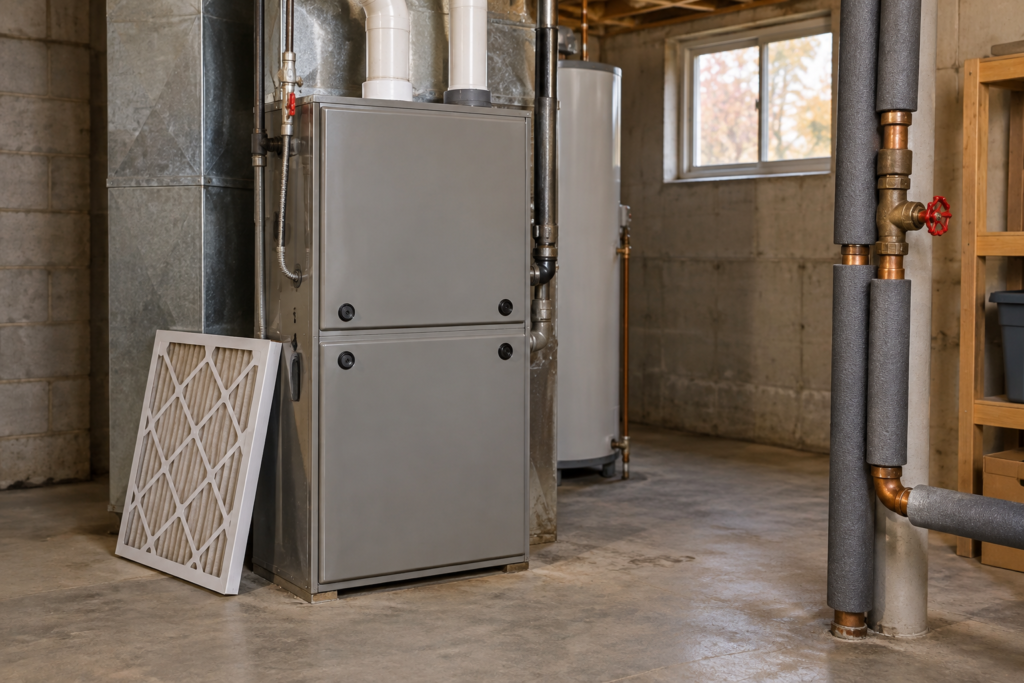
ENERGY STAR recommends a yearly pre-season check-up. It says to check the heating system in the fall, because contractors get busy once winter arrives. The U.S. Fire Administration agrees: yearly professional cleaning and inspection.
From a distance, the job is less about the furnace and more about getting proof:
- Ask the technician for a written report plus photos. You want the filter, the burner or heat exchanger, the flue connection and the data plate (for the equipment’s age).
- Ask them to write down the age of the unit and anything they would plan to replace within 2–3 years. That note is your capex budget.
- Give the tenant the entry notice your lease and state law require, with two time windows.
Filters are the other half. ENERGY STAR says to inspect, clean or change filters monthly during heavy use. Interpretation, not fact: tenants rarely do it, so ship filters on a schedule or add a swap to every handyman visit.
Step 2: Protect the pipes, and know what your policy really says
The American Red Cross says that if a home will be empty in cold weather, the heat should stay on at no lower than 55°F. That matters most for holiday travel and winter turnovers.
The common mistake: assuming insurance will cover a burst pipe no matter what. Landlord policies are usually “dwelling” forms (DP-1, DP-2, DP-3), and they have limits on vacancy. The North Carolina Department of Insurance describes named-peril dwelling forms that cover accidental water discharge only “as long as the building was not vacant for 60 days before a loss.” A sample DP-3 form excludes freezing damage while the dwelling is vacant or unoccupied, unless you used reasonable care to keep the heat on or shut off the water and drain the system.
Every policy is different, so read your own declarations page and vacancy clause. Ask your agent one direct question: “If my unit is empty for 45 days in January, what do I have to do to stay covered?”
Practical steps:
- Get a labeled photo of the main water shutoff into your file and your tenant’s hands.
- Have hose bibs shut off and drained from inside where the house has that setup. Ask that exposed pipes in crawlspaces or garages be insulated.
- Put a lease clause (or at least a written reminder) about minimum thermostat settings during cold spells and trips.
- Think about a few leak sensors and a Wi-Fi thermostat that alert you, not only the tenant. Interpretation, not fact: hearing in two hours instead of two days often separates a repair from a claim.
Step 3: Check smoke and CO alarms by their dates, not by pressing the button
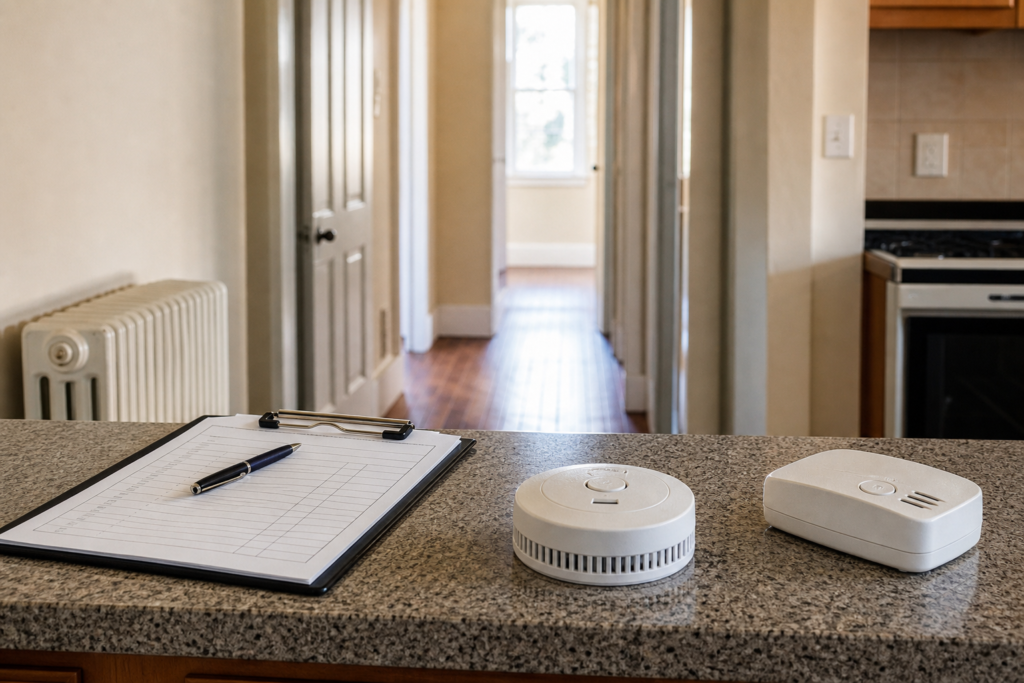
The U.S. Fire Administration says to test smoke alarms monthly and to replace 9-volt batteries at least once a year. It also says to replace the whole alarm 10 years from its manufacture date. The CDC says to put CO detectors near every sleeping area. It says to replace them per the manufacturer’s instructions or every 5 years.
The test button only proves the alarm beeps today; the date label shows whether it is past its life. Ask your technician or handyman to photograph the date label on every alarm while they are there. Replace any that are too old. Many states and cities also have their own alarm rules for rentals. If you take vouchers, the NSPIRE inspection standards add smoke and CO requirements too.
What it costs vs. what it prevents (example)
Illustrative example, not a quote: a fall furnace check, a box of filters, two leak sensors and one replaced alarm are a few hundred dollars in most markets. On the other side is a single water-and-freezing claim that averages $15,400 before your deductible, plus lost rent while the unit dries out. Get two local prices before you decide.
Your October checklist
- Book the heating check this week. Ask for a written report, photos and the unit’s age.
- Set up filter delivery to the tenant, or add a filter change to every handyman visit.
- Photograph and label the main water shutoff. Share it with your tenant and your handyman.
- Shut off and drain outside faucets. Insulate exposed pipes.
- Send tenants a short cold-weather note: keep the heat at 55°F or higher when away, and report drips or cold rooms right away.
- Photograph every smoke and CO alarm’s date label. Replace expired units.
- Read your policy’s vacancy and freezing wording, and ask your agent the 45-day question.
- If a winter turnover is coming, decide ahead of time: heat on at 55°F or higher with weekly checks, or water off and drained.
- Save every report and photo in one folder per property.
If you do not yet have a reliable local person to run these visits, start with our guides on how to hire a property management company and managing an out-of-state rental by yourself. If you are still weighing a first remote purchase, is out-of-state investing for you? covers the trade-offs. Near water? Standard policies exclude flood; see what a FEMA flood-map change does to your rental.
This article is for general educational purposes only and is not legal, tax, insurance, financial or investment advice. Insurance policy wording, state landlord-entry rules and local alarm codes vary. Check your own policy, lease and local requirements, and consult a licensed professional before acting.