FEMA Redrew 52 Flood Maps in One Day: What a Map Change Actually Does to Your Out-of-State Rental

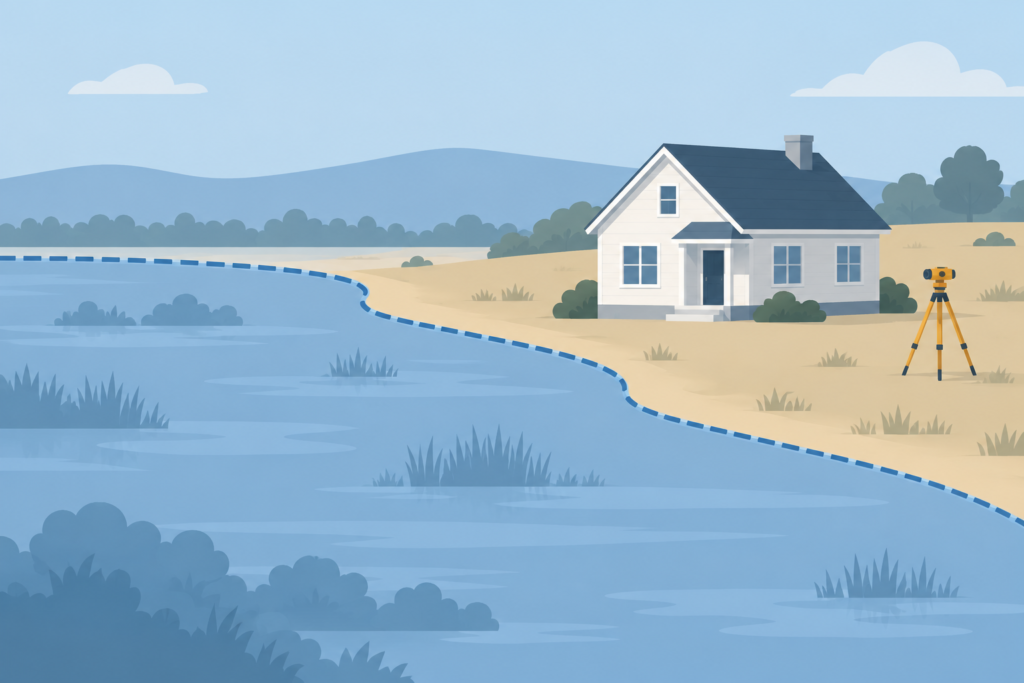
On September 10, 2026, FEMA published three Changes in Flood Hazard Determinations notices in the Federal Register covering 52 separate map-revision cases in 21 states — from Huntsville, Alabama and Palm Bay, Florida to Hood River County, Oregon. The same day, a fourth notice made new maps final for Phillips County, Colorado and Hood River County, Oregon effective November 13, 2026.
If you own a rental two time zones away, this is news that never reaches you. Your tenant gets no letter; your city does not email you. The first signal is usually a notice from your loan servicer — and by then a 45-day clock is running. Here is what a map change actually does, and does not do, to an out-of-state rental.
What a map revision changes: the lender requirement, not your risk-based price
The federal mandatory-purchase rule lives in 42 U.S.C. 4012a(b). A regulated lender may not make, increase, extend, or renew a loan secured by improved real estate in a Special Flood Hazard Area (SFHA) unless the building is covered by flood insurance for the term of the loan, in at least the lesser of the outstanding principal balance or the maximum NFIP limit. That test tracks the map in effect, so when a revision puts your building inside the SFHA, the requirement attaches to a loan you closed years ago.
Here is the part most landlord blogs get backwards: since Risk Rating 2.0 was fully implemented on April 1, 2023, your flood zone no longer sets your NFIP premium. FEMA’s own pricing page says the program now rates on flood frequency, flood type, distance to a water source, elevation and replacement cost — and that maps are retained for “mandatory purchase and floodplain management,” not for pricing (FEMA, NFIP’s Pricing Approach, last updated April 9, 2026).
Interpretation, not fact: for a leveraged rental, a map change is mostly a compliance event rather than a repricing event. The coverage was already priced to your property’s modeled risk; the map decides whether your lender can force you to buy it.
Two clocks that favor the owner who moves fast
1. The 1-day waiting period (13-month window). New NFIP policies normally take effect 30 days after application and payment. But under 44 CFR 61.11(a), during the 13-month period beginning on the effective date of a revised map, initial coverage becomes effective at 12:01 a.m. the day after you apply and pay. The October 2025 NFIP Flood Insurance Manual (section 2.III.B, “Map Revision Exception”) confirms the mechanics: the insurer must receive the application and full amount due within 13 months of the map revision date, or the 30-day wait returns.
2. The Newly Mapped discount (12 months, or 45 days from lender notice). Per the same manual (section 3.III.E.2, citing 42 U.S.C. 4015(i)), a building previously shown in Zone B, C, or X that is newly mapped into an SFHA may qualify for a reduced premium that phases out annually. Eligibility requires either a policy effective date within 12 months of the effective FIRM revision date, or application within 45 days of the initial lender notification where that notice came within 24 months of the revision. FEMA’s agent-facing guidance describes the benefit as a 70% discount applied to the first $35,000 of building coverage and first $10,000 of contents, phasing out with annual increases capped by statute (FEMA/NFIP for Agents). It does not apply on a community’s first-ever FIRM, and it is lost if the policy lapses.
Both clocks run from the map effective date, not the day you found out — which is the whole argument for tracking your own counties.
What happens if you ignore the notice
Under 42 U.S.C. 4012a(e), if the lender or servicer determines at any time during the loan term that the building is not covered, it must notify you that you should buy coverage. If you do not buy within 45 days, the servicer must purchase it for you and may charge you the premiums and fees — including for coverage backdated to the date your coverage lapsed or fell short. The statute does require the servicer to cancel force-placed coverage and refund overlapping premiums within 30 days of receiving proof of your own policy, so a late fix is still worth making.
The map can also move in your favor
Revisions cut both ways. A Letter of Map Revision can move a parcel out of the SFHA, which removes the federal purchase requirement (your lender may still require coverage as a matter of contract). If your building sits on natural high ground that the map does not reflect, the tool is a Letter of Map Amendment — and under 44 CFR 72.5(c), FEMA charges no review or processing fee for a LOMA request. You still pay a surveyor for the elevation data, which is the real cost.
One diligence note: the manual’s “New Policy After a Real Estate Transaction” rule lets a buyer keep a statutory discount the seller had, if the building was NFIP-insured with building coverage at transfer, is not condo-owned, and the new policy is effective within one year of the transaction. Ask for the seller’s policy number.
A checklist for absentee owners
- Look up each property at the FEMA Map Service Center; record the FIRM panel and effective date, and re-check twice a year.
- Watch Federal Register flood notices for your counties; the determination tables list each case number and date of modification.
- If a revision puts you in an SFHA, apply and pay inside the 13-month window for next-day coverage, and inside 12 months for Newly Mapped pricing.
- Never let a flood policy lapse on a newly mapped building — the discount does not come back.
- Open the servicer envelope. The 45-day force-placement clock starts with that notice, not with your reply.
- If your structure is above the base flood elevation, price a LOMA: no FEMA fee, surveyor cost only.
- Require your property manager to forward insurance and municipal mail the same week it arrives — see our guide on hiring a property management company.
Two related pieces we published recently: the NFIP authorization deadline that moved to December 11, and HUD’s proposal to delete its two-foot flood elevation standard. If you are still weighing remote ownership, start with is out-of-state real estate investing for you and managing an out-of-state property yourself.
This article is educational information for property owners, not financial, insurance, tax, or legal advice. Flood insurance eligibility, discounts, and lender requirements depend on your specific property, map history, and loan documents. Verify your own situation with FEMA, your insurer, and your loan servicer before acting.