Radon in Your Out-of-State Rental: 4 States With Lease Rules and a 7-Step Winter Test Plan

Radon is the one rental problem your tenant can’t see, smell or text you a photo of. It’s a radioactive gas that seeps up from soil into homes. Per the EPA, it’s the second leading cause of lung cancer, linked to about 21,000 deaths a year. Most small landlords have never tested a rental.
Winter is a practical time to fix that. Short-term tests need windows and doors kept shut, and tenants already do that in the cold. Here’s what four states require, the misconception that keeps owners from testing, and a seven-step plan you can run from another state.
The misconception: “Radon is only a problem in certain areas”
Owners look at a radon map, see their rental’s county isn’t in the worst zone, and stop there. The EPA says not to. According to EPA’s RadTown page, nearly 1 in 15 U.S. homes has a radon level that should be reduced, and high levels have been found in every state. The only way to know your unit’s level is to test it.
The numbers you need
- Action level: 4 pCi/L. EPA recommends fixing a home at 4 picocuries per liter or higher, and says to consider fixing it between 2 and 4. The average U.S. home is about 1.3.
- How to test. EPA’s Citizen’s Guide to Radon says to put the kit in the lowest lived-in level (not the kitchen or bathroom), close windows and outside doors at least 12 hours before a 2-3 day test, and follow up any result of 4 or more with a second test before deciding.
- Cost to fix. EPA’s Consumer’s Guide to Radon Reduction says most homes can be fixed for about the cost of other common home repairs. For a concrete range, Massachusetts’ health department puts most systems at $1,200 to $2,000, and University of Nevada Extension cites an average of $2,500 to $3,800.
Four states with rental-specific rules
Most states have no radon law for rentals, but some do. If you own across state lines, check each one.
Florida requires a set “RADON GAS” notice on at least one document signed at or before the lease. The exact wording is in section 404.056(5). Short stays of 45 days or less are exempt. Florida doesn’t require a test, only the notice. Check that your lease template has it.
Illinois, under the Radon Awareness Act, covers units below the third story. Per the state radon program, you give tenants the state’s “Radon Guide for Tenants” and a disclosure form, plus any reports you have showing a radon hazard. The tenant then has 90 days from the start of the lease to test. If their result is over the action level and you choose not to mitigate, the tenant may terminate the lease. You can hire a radon contractor to retest within 30 days.
Colorado, under C.R.S. 38-12-803, requires a signed written disclosure before the lease. It includes a set warning statement, anything you know about testing or mitigation, and the state’s radon brochure. A tenant may void the lease if you skip the disclosure, or if you don’t make a reasonable effort to mitigate within 180 days of being told a professional measured 4 pCi/L or more. Since January 1, 2026, that void-the-lease remedy doesn’t apply to leases of one year or less.
Maine goes furthest. 14 M.R.S. §6030-D requires landlords to test, generally using a state-registered tester. After that, a retest is due every 10 years if a tenant asks, unless a mitigation system is in place. Buildings that started operating after March 1, 2014 must be tested within 12 months of a tenant moving in. You give tenants written results within 30 days and before a new lease, and report the results to the state. The fine is up to $250 per violation, and missing the notice is a breach of the warranty of habitability.
Interpretation, not fact: In Colorado, Illinois and Maine, what you already know about radon shapes what you must disclose. That’s not a reason to avoid testing. A tenant can test on their own, and a surprise result mid-lease is worse than one you found and fixed first.
A 7-step radon plan you can run from another state
- Check your paperwork. Add any required state notice or disclosure to the lease template now (Florida, Illinois, Colorado, Maine). For other states, check with the state radon program.
- Pick who tests. A mail-in short-term kit is cheapest. A licensed or certified measurement professional costs more but is required in some cases (Maine) and is harder to argue with.
- Give proper entry notice and ask for help. Send the tenant the kit with a one-page instruction sheet. Explain what radon is, where the kit goes, the closed-house rule, and when to mail it. Your mid-lease inspection visit is a good time to place it.
- Log the test. Ask for a photo of the kit in place with the start date and time written on the label. Labs need accurate start and stop times.
- Retest before acting. If the result is 4 or higher, run a follow-up test as EPA recommends.
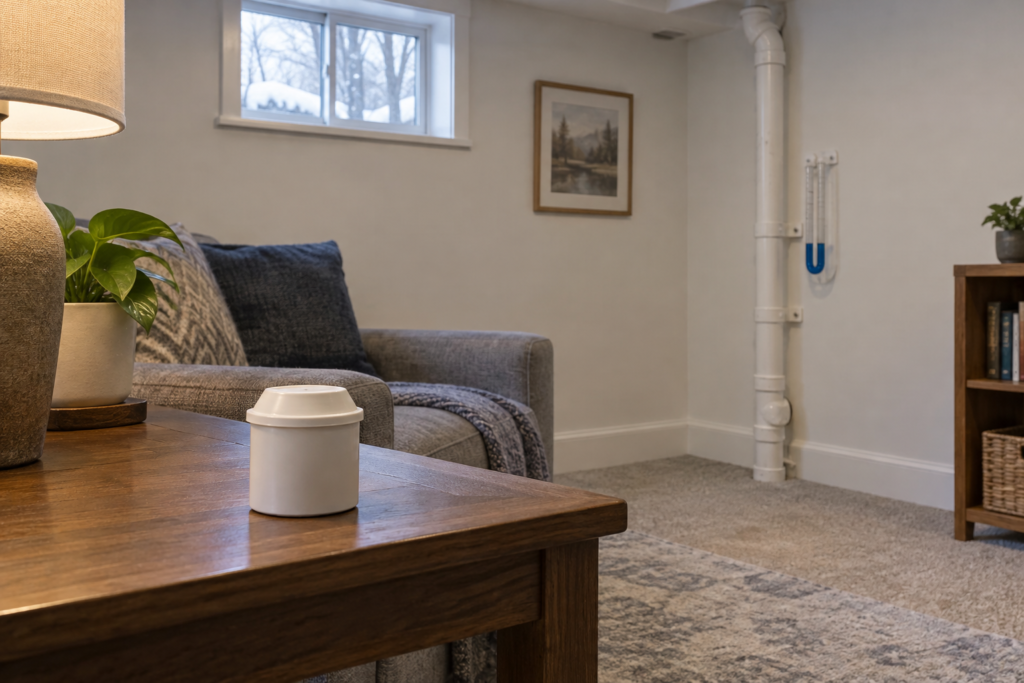
- Get two mitigation quotes. Ask about diagnostics, a warning gauge, post-install testing, and any guarantee. EPA says active systems need a warning device, usually a manometer, and the fan must run all the time. Budget it from your capex reserve.
- Keep it working. Ask the tenant to text a photo of the gauge each quarter. Retest about every two years, which is EPA’s suggestion, and after major foundation work. Save every result in the property folder.
Buying your next rental?
Put a radon test in your remote due-diligence checklist before the option period ends, and ask the seller for past results. For more on running rentals from a distance, see how to manage an out-of-state property by yourself and our resources and tools.
This article is for general education only and is not legal, tax, financial or medical advice. Radon disclosure, testing and lease rules vary by state and city and change over time; confirm current requirements with your state radon program or a licensed attorney. Statute details are as of November 2026; cost figures are published estimates, not quotes. The featured image is an AI-generated illustration and does not show a real property.