Who Shovels the Snow at Your Out-of-State Rental? City Rules and a 7-Step Winter Plan

The first real snow of the season is when out-of-state landlords find out who was supposed to shovel. Usually by a city violation notice, a neighbor’s text, or worse: a letter from a lawyer about someone who slipped on the walk. If you own a rental in a snow city and live somewhere else, here’s who’s actually responsible and a 7-step plan you can set up this week.
Why this matters now
NOAA’s 2026-27 Winter Outlook (released October 15) favors warmer-than-average temperatures across the Midwest and much of the East, and wetter-than-average conditions along the southern tier and the East Coast. NOAA also says plainly that the outlook does not predict seasonal snowfall, because snow isn’t forecastable more than about a week out. Interpretation, not fact: a “warm” winter forecast is no reason to skip snow planning. Warmer winters can mean more freeze-thaw cycles, and that means more ice on walks and steps.
The common misconception: “The lease says the tenant shovels, so it’s not my problem”
A lease clause decides who does the work between you and your tenant. It doesn’t necessarily decide who the city tickets or who gets named if someone falls. Three examples from official city pages:
- New York City. The Department of Sanitation’s snow and ice rules require a path at least four feet wide. Hydrants, ramps and curb cuts must be cleared too. You get 4 hours if snow stops between 7 AM and 4:59 PM, 14 hours if it stops between 5 PM and 8:59 PM, and until 11 AM if it stops overnight. Fines are $100, then $150, then $250. Separately, NYC’s sidewalk law (Admin. Code § 7-210) puts liability for unsafe sidewalks, including snow and ice, on the abutting owner. The exemption covers only 1-3 family homes that are owner-occupied and used only as residences (Meyer v. City of New York, 2014). A 2-family rental whose owner lives in another state doesn’t fit that exemption.
- Chicago. The city’s sidewalk snow page says owners must clear a 5-foot path, seven days a week. Snow that falls between 7 AM and 7 PM must be cleared by 10 PM. Overnight snow must be cleared by 10 AM. Fines run $50-$500.
- Minneapolis. Under the city’s sidewalk rules (Ordinance 445.20), single-family homes and duplexes have 24 hours after snow stops. Other properties get 4 daytime hours. If you miss the deadline, city crews clear the walk and bill you. If the bill goes unpaid, it’s added to your property taxes. The city also says to shovel around trash carts and, if you’ll be away, “arrange for someone else to shovel.”
Interpretation, not fact: in many cities the duty is written to the owner, or to the owner and the occupant. Assigning shoveling to your tenant is reasonable for a single-family home. Just don’t assume it moves the city’s fine, or a slip-and-fall claim, away from you.
Check your insurance before the first storm
The standard ISO dwelling form (DP 00 03) covers the building, other structures, your personal property and lost rent. Its named perils for contents include “weight of ice, snow or sleet.” The form itself has no liability section. In the ISO dwelling program, liability is added separately, usually through the personal liability supplement (DL 24 01), which has a $100,000 minimum limit. Many packaged “landlord policies” do bundle liability in, as the Insurance Information Institute describes. That’s exactly why you should check your declarations page instead of assuming. For more, see our landlord insurance checklist.
The 7-step snow, ice and trash plan
- Look up your rental’s city rules today. Search “[city] sidewalk snow removal.” Write down the deadline, the path width, whether corner ramps are included, and what happens when you miss it (a fine, or the city bills you).
- Decide who shovels, in writing. For a single-family home, the tenant often handles it if the lease says so clearly. For a duplex or small multifamily, or an older or disabled tenant, plan on a paid service. Put the assignment in the lease or a signed addendum. Spell out the walks, steps, driveway, ramps, hydrant and the area around the trash carts.
- Hire a backup before you need one. Snow contractors fill their routes in November. Get a written per-push or seasonal price, the trigger depth (for example, 2 inches), the response time, and proof of liability insurance. Our contractor vetting guide applies here too.
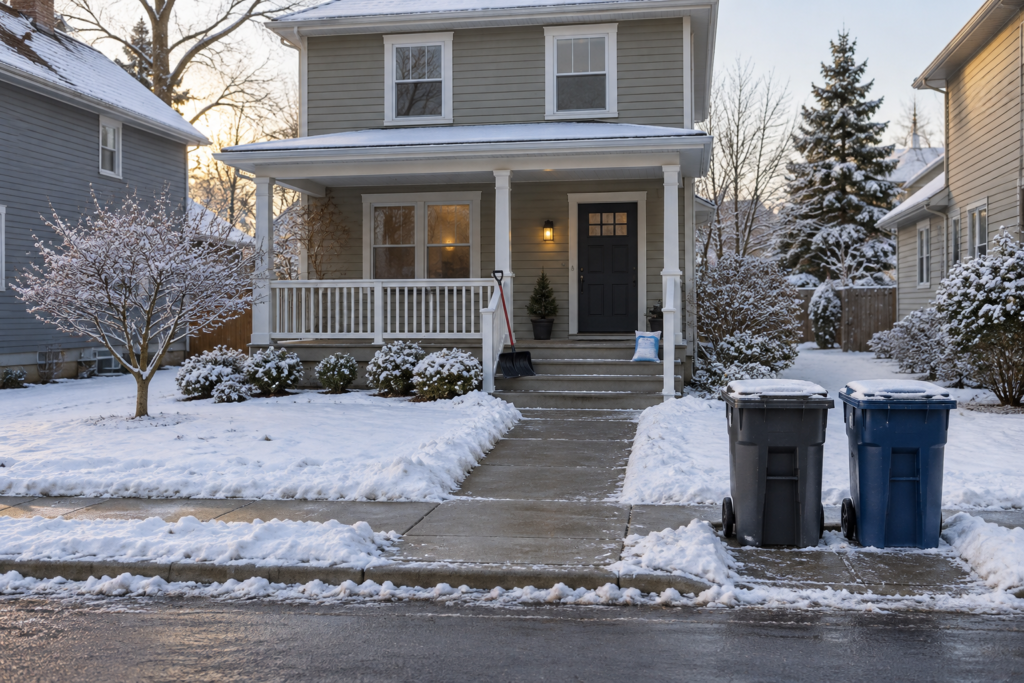
- Stock the property. Leave a shovel and a bag of ice melt or sand by the door. An illustrative cost is $40-$80 for both.
- Set a storm-day check-in. When the forecast shows snow, text the tenant or contractor to confirm who’s on it. Ask for a photo of the cleared walk afterward. Keep those photos. They’re your record that the walk was cleared on time.
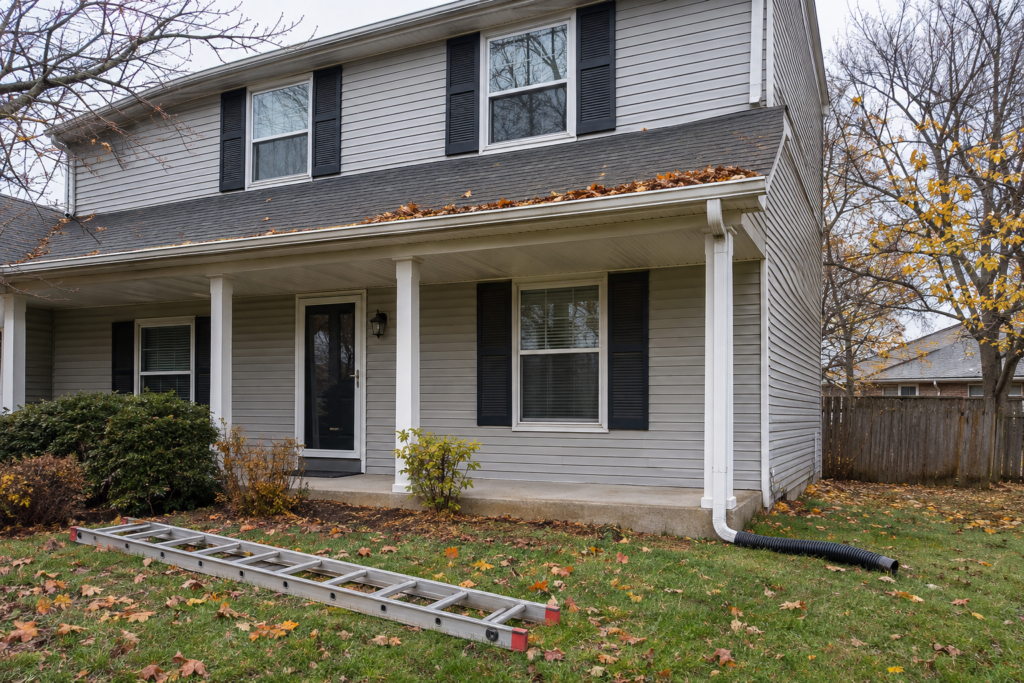
- Handle ice, not just snow. Minneapolis reminds owners that melt-and-refreeze ice is their job all season. Check downspouts that dump water across walks, and gutters that overflow onto steps. Those spots refreeze every night.
- Sort out trash day. Confirm whose name the trash and recycling account is in, the pickup day, and who rolls the carts out and clears snow around them. Missed pickups and overflowing carts are common sources of code complaints at absentee-owned rentals.
What it can cost (illustrative, not a quote)
Made-up but realistic numbers: a contractor might charge $40-$75 per push for a small walk and driveway. Over 8 storms, that’s $320-$600. Compare that with a $100-$250 city fine per violation, a city cleanup bill added to your taxes, or a slip-and-fall claim that lands on your liability limit. Budget for snow service in your operating reserves, not as a surprise.
The bottom line
The lease decides who holds the shovel. The city code and your insurance decide what happens when nobody does. Set the assignment, the backup and the photo habit now, before the first storm. Pair this with our winter checklist for out-of-state rentals. If you’d rather hand it all off, our guide to hiring a property management company covers what to ask about seasonal maintenance.
This article is general educational information, not legal, insurance or financial advice. Snow-removal duties and sidewalk liability vary by city, state, property type and lease, and they can change. Confirm the rules for your property with the city, your insurer, or a local attorney. Cost figures are illustrative. The featured image is AI-generated and does not show a specific property.
Related: Gutters, leaves and ice dams at your out-of-state rental