Smoke and CO Alarms in an Out-of-State Rental: A 7-Step Remote Check You Can Run This Week

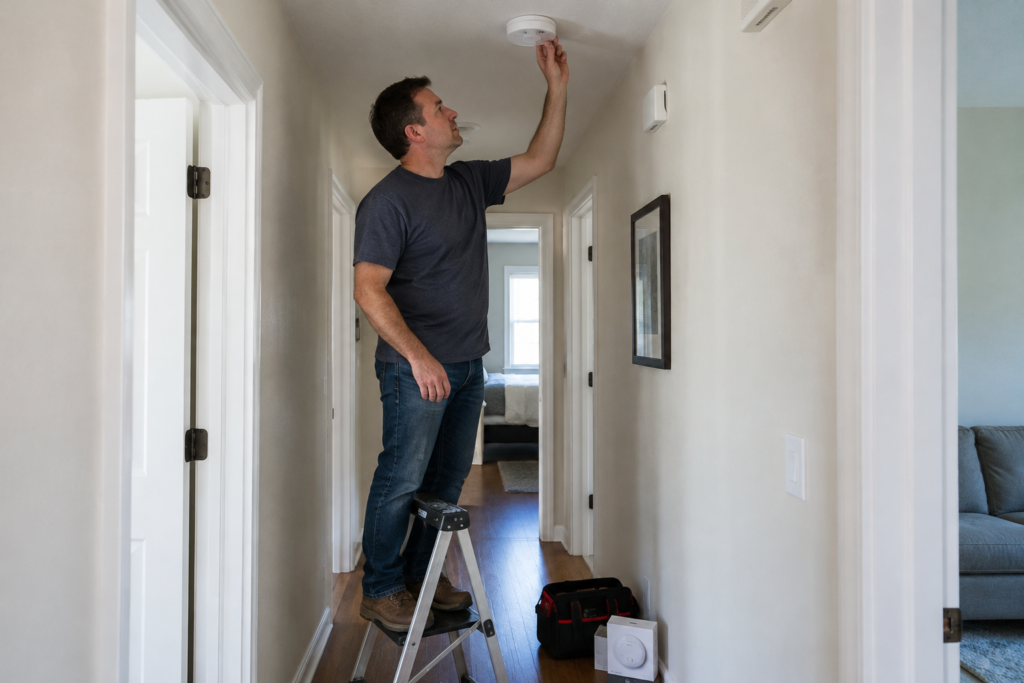
The clocks went back this past Sunday, November 1,, the classic “check your alarms” weekend. If your rental is in another state, you can’t climb that ladder yourself. Here is a remote-friendly plan for its smoke and carbon monoxide (CO) alarms: what to check, who is responsible, and what to put in writing.
Why this is worth 30 minutes this week
The National Fire Protection Association reports that from 2018 to 2022, nearly three out of five home fire deaths happened in homes with no smoke alarms (43%) or alarms that did not work (16%). The death rate per 1,000 reported home fires was about 60% lower in homes with working alarms. The most common failure was power: missing or dead batteries, or disconnected hardwired units.
CO is the quieter risk. The Consumer Product Safety Commission says more than 200 people in the U.S. die each year from accidental non-fire CO poisoning tied to consumer products, more than 100 of them linked to portable generators. CPSC recommends CO alarms on every level of the home and outside sleeping areas.
The common mistake: “It beeped when I pressed test, so it’s fine”
A working test button does not mean the alarm is current. The U.S. Fire Administration says smoke alarms need to be replaced 10 years from the manufacture date printed on the unit, not the date someone installed it. USFA also says to test monthly and, for 9-volt and hardwired alarms, replace the battery (or backup battery) at least once a year. Sealed 10-year lithium alarms are replaced as a whole unit, following the manufacturer’s instructions. CO alarms also wear out; their replacement timing is set by the manufacturer, so check the date and label on each one.
The useful question is not “do they work?” but “how old is each alarm, where is it, and who checked it last?”
Who is responsible? It depends on the state (three examples)
- Texas. The landlord must install at least one smoke alarm in each bedroom, plus one in a hallway serving multiple bedrooms and one on each level (Prop. Code 92.255). The landlord must test it at the start of each tenant’s possession. During the lease, the duty to inspect or repair kicks in when the tenant reports a problem, and the landlord doesn’t have to supply batteries after move-in if the alarm worked at the start (92.258). If a tenant sends written notice and the landlord does nothing within seven days, the landlord can be liable (92.259). The flip side: a lease with an underlined or bold notice about not disabling alarms lets a landlord pursue a tenant who removes batteries and ignores a seven-day notice (92.2611).
- Florida. For a single-family home or duplex, unless otherwise agreed in writing, the landlord must install working smoke detection devices at the start of the tenancy (Fla. Stat. 83.51(2)(b)).
- California. Since 2014, the owner of a rented single-family home is responsible for testing and maintaining smoke alarms. The owner must make sure they work when a new tenancy starts, and the tenant must report alarms that don’t work (Health & Safety Code 13113.7). Homes with a fuel-burning heater or appliance, a fireplace or an attached garage need CO devices (17926). The landlord must maintain them and have them working at move-in, and must fix problems the tenant reports (17926.1).
Interpretation, not fact: all three states share one pattern. The owner gets the alarms right at move-in, and the tenant’s report starts the owner’s clock during the lease. For a remote landlord, that means two things decide whether you’re covered: a documented move-in test, and a reporting channel the tenant actually uses. Cities and counties can add their own rules (hardwired, interconnected or sealed-battery requirements), so ask your property manager or the local fire marshal what applies at your address.
The 7-step remote alarm plan
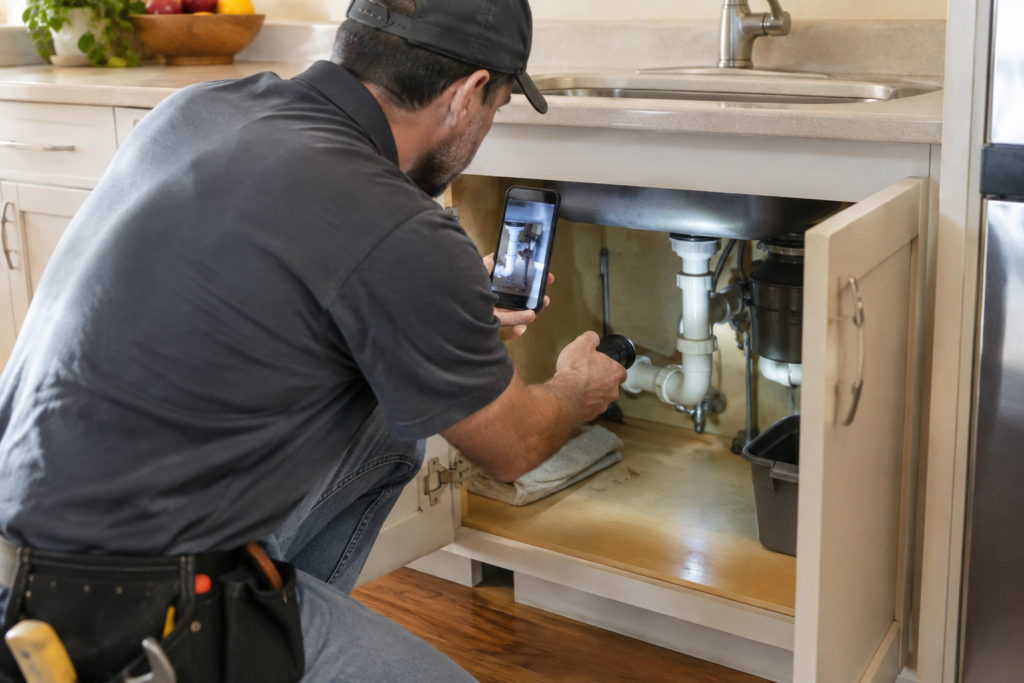
- Build an alarm inventory. Have your manager, handyman or tenant photograph each alarm and its back label with the manufacture date. Log it on one page: location, type (smoke, CO, combo), power (9-volt, sealed 10-year, hardwired), date.
- Check coverage against the rules. Each bedroom, outside sleeping areas, every level including the basement (USFA), and CO coverage if the home burns gas, oil, propane or wood or has an attached garage.
- Replace anything 10+ years old, or missing a date label. If there’s no readable date, treat the alarm as expired. Hardwired units should be replaced by a qualified electrician (USFA).
- Batch the visit. Combine alarm work with a filter change or the mid-lease inspection, and give proper written entry notice.
- Document every move-in test. Add a line to your turnover checklist: “all alarms tested, date, by whom,” with a short video. Have the tenant initial it on the move-in form.
- Give the tenant one easy way to report problems. Put it in the lease and the welcome letter: a chirping alarm or a CO alarm going off gets reported right away, and any CO alarm means get out and call 911 first. Route these reports like the urgent repairs in your 2 a.m. repair playbook.
- Add a “don’t disable alarms” clause. In Texas, the bold or underlined notice in 92.2611 is what lets you use the statute’s remedies. In other states, ask a local attorney or your manager for the right wording.
What it might cost (illustrative, not a quote)
USFA lists basic smoke alarms from about $6, dual-sensor from about $24, and wireless interconnected models from about $40. For a 3-bedroom, two-level house needing five smoke alarms and two CO alarms, an illustrative budget is $150-$350 in parts, plus a handyman’s minimum visit, often $100-$200 depending on the market. Get quotes from a vetted handyman and keep dated photos.
The bottom line
Alarms are cheap. What usually goes missing for a remote owner is the paperwork: how old each alarm is, a record that you tested it at move-in, and a way for the tenant to report problems. Set those up once, calendar the 10-year replacement dates, and it becomes one line on your yearly checklist. For the wider remote setup, see our guide on managing out-of-state real estate yourself.
This article is general educational information, not legal, insurance or financial advice. Alarm and landlord-safety rules vary by state, county and city and can change; confirm the requirements for your property with local officials or a qualified professional. Cost figures are illustrative. The featured image is AI-generated and does not show a specific property or product.