Will One Out-of-State Rental Actually Cash-Flow? The 9-Line Monthly Math Most New Landlords Skip

The listing says the house rents for $1,850 and the mortgage would be about $1,300. That looks like $550 a month in your pocket. For most first-time out-of-state buyers, that is the most expensive math mistake they will ever make, because the mortgage is only one of nine lines that decide whether a rental pays you or you pay it.
Here is a plain-English worksheet for one single-family rental, built for owners with one to five doors who will never mow the lawn themselves.
The misconception: “rent minus mortgage = cash flow”
Rent minus the loan payment ignores taxes, insurance, empty months, repairs, big-ticket replacements and the person you pay to manage it. Those costs are real even in months when nothing breaks. You just pay them later, in a lump.
Start with today’s financing cost
Freddie Mac’s survey put the average 30-year fixed rate at 7.40% for the week of October 15, 2026, up from 6.27% a year earlier. That average describes borrowers with good credit, 20% down, buying an owner-occupied single-family home. Interpretation, not fact: investment-property loans usually price higher than that benchmark, so get a real quote for a non-owner-occupied loan before you run numbers. Our example uses 8.0% as an illustrative investor rate.
The 9-line monthly worksheet (illustrative)
Example: a $240,000 house, 25% down ($60,000), $180,000 loan over 30 years, market rent $1,850. Every figure below is illustrative, not a quote.
- Principal and interest: about $1,321 at 8.0%.
- Property tax: $240. Do not copy the seller’s bill (see the tax section below).
- Insurance: $165. The average homeowners premium was $1,569 nationally in 2022 (Triple-I, from NAIC data), and Triple-I says landlord policies generally cost about 25% more than a standard homeowners policy. Get a quote for the actual address.
- Vacancy: $92 (5% of rent). The national rental vacancy rate was 7.3% in Q2 2026 (Census Bureau). Use your local number if you can find it.
- Routine repairs: $167. In the Census Bureau’s Rental Housing Finance Survey, the median single-unit rental spent about $2,000 a year on repairs.
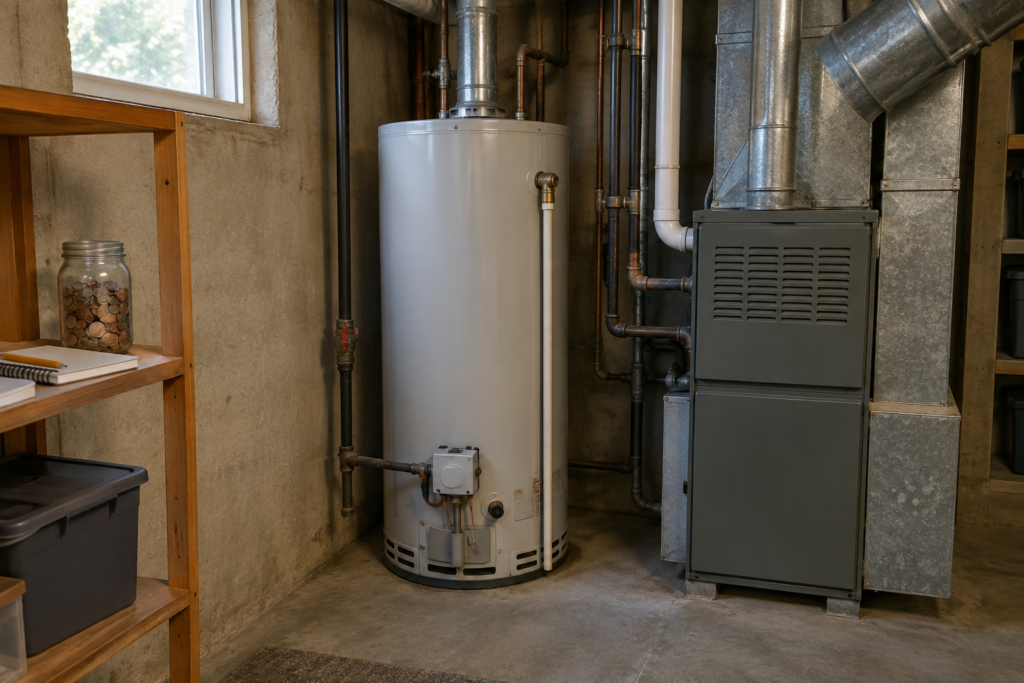
- Capital reserve: $150 for roof, HVAC, water heater and flooring. See our line-by-line reserve plan.
- Property management: $158 (9% of collected rent).
- Leasing and turnover: $40, spreading a leasing fee and make-ready costs across a typical stay.
- HOA, utilities you pay, lawn, pest: $0 in this example. Fill in yours.
Total: about $2,333 a month against $1,850 of rent, or roughly $483 a month negative. The same house that “made $550” on the back of a napkin loses money once every line is in.
The property tax trap for out-of-state buyers
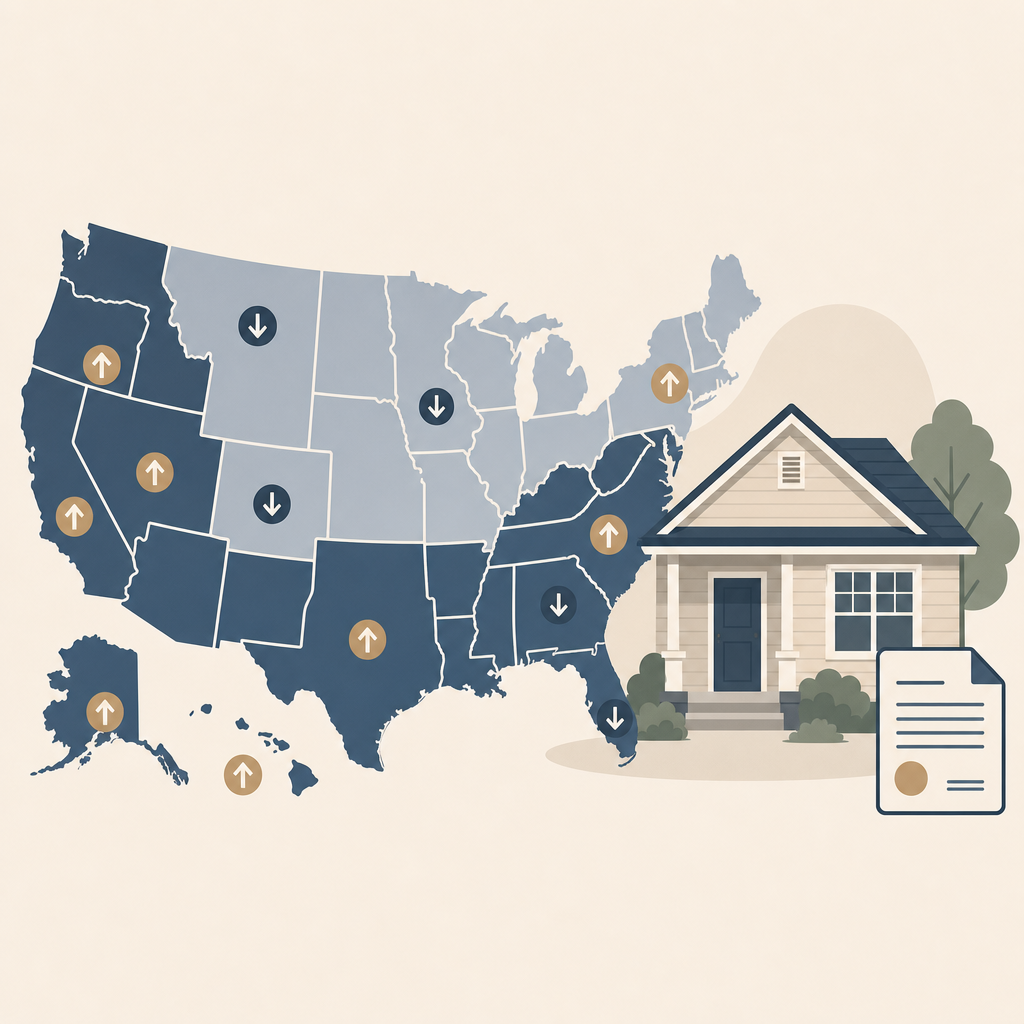
Property tax rates vary a lot. Tax Foundation’s county data (median owner-occupied homes, 2024) shows effective rates of about 0.58% in Jefferson County, Alabama, 0.89% in Marion County, Indiana, 0.97% in Shelby County, Tennessee, 1.50% in Harris County, Texas, and 1.89% in Cuyahoga County, Ohio. On a $240,000 house, that is the difference between about $116 and $378 a month.
Those are owner-occupied figures. A rental often pays more, because homeowner breaks may not carry over. Florida is a clear example. Its homestead exemption is for property the owner makes a permanent residence. A homestead’s assessed value can rise by no more than 3% or inflation a year, whichever is lower, and it is reassessed at full value after a change of ownership. Non-homestead residential property has a looser 10% annual cap.
Interpretation, not fact: if the seller lived in the home for years, their tax bill can be far below what you will pay as an investor. Ask the county assessor’s office or a local agent to estimate the non-homestead tax at your purchase price.
What changes the answer
Run the same worksheet with different inputs before you decide.
- Break-even rent: with the costs above, rent would need to be about $2,410 to cover everything. If local rents are nowhere near that, the price or the loan is the problem.
- More cash down: paid in cash, the same house nets about $838 a month before income tax, roughly 4.2% a year on $240,000. That is the property’s real earning power without the loan.
- Rate quote: each point of interest on $180,000 moves the payment by roughly $120 to $130 a month.
- Rent assumption: check it against real comps using our rent-setting method, not the listing’s “projected rent.”
Your Monday checklist
- Get a non-owner-occupied rate quote and write down the exact principal and interest.
- Ask the county (or a local agent) for the estimated tax as a non-homestead rental at your price.
- Get a landlord-policy quote for the address. Our insurance checklist lists what to ask.
- Get one written property management proposal with every fee listed: monthly, leasing, renewal and markup on repairs.
- Fill in all nine lines, then the break-even rent. Walk away if the deal only works with zero vacancy and zero repairs.
- Recheck the numbers once a year after you own it, using your manager’s statements. Our monthly audit shows how.
Negative monthly cash flow is not automatically a deal-breaker. Some owners accept it for paydown or appreciation. But it should be a choice you make on purpose, with reserves to cover it, not a surprise in month three. If you are still deciding whether remote ownership fits you, start with is out-of-state real estate investing for you? and our resources and tools.
This article is general educational information, not financial, investment, tax, lending or legal advice. All dollar figures are illustrative, not quotes, and your rates, taxes and costs will differ. Talk with a qualified lender, tax professional or local expert before buying. The featured image was generated with AI and does not show a real property.