How to Vet a Handyman You’ve Never Met: A Remote Landlord’s 7-Point Check Before the First Job


When you own a rental two time zones away, your handyman is the person who actually touches your property. A good one keeps a small drip from becoming a water claim; a bad one leaves you with a half-finished job, a lost deposit or worse. The tricky part is that you usually hire this person without ever shaking their hand.
Here is a practical system for vetting a handyman or small contractor from another state. Do it before anything breaks, so you aren’t choosing someone in a panic at 2 a.m.
The misconception: “It’s a small job, so a license doesn’t matter”
Sometimes handyman work is unregulated, but the limits are narrower than most owners think, and they vary by state.
- Fact: In California, an unlicensed person can only do jobs under $1,000 (labor, materials and everything else combined), and only if the job needs no permit and the person hires no helpers. If any of those three conditions fails, a contractor’s license is required. The limit rose from $500 on January 1, 2025 (CSLB, AB 2622 bulletin).
- Fact: Texas has no general state handyman license, but plumbing and electrical work are licensed trades at the state level (Texas Plumbing License Law; TDLR electricians program), and cities can add their own rules.
- Fact: Florida’s statutory owner-builder disclosure warns that if an unlicensed contractor or their worker is injured on your property, “you may be held liable for damages,” and that the state licensing board may be unable to help you recover losses from an unlicensed contractor (Fla. Stat. 489.103).
Interpretation, not fact: the safe default for a remote owner is to treat “handyman” as fine for small, permit-free fixes (a running toilet, a sticking door, a new faucet cartridge), and to use a licensed trade for anything involving gas, wiring, new plumbing, roofing or a permit.
The 7-point check
1. Look up the license yourself
Don’t accept a photo of a license card; search the state board’s online lookup (for example, California’s CSLB license check) and confirm the name, the classification and that the license is active. If your state doesn’t license handymen, check the city or county instead. The FTC gives the same advice (FTC home improvement scam guide).
2. Get a certificate of insurance, with you on it
Ask for a certificate of insurance (COI) showing general liability and, if they have any employees, workers’ compensation. Ask their insurance agent to send it directly to you, and call the agent to confirm the policy is current. Calendar the expiration date.
3. Ask the “lead question” if your house was built before 1978
Under EPA’s Renovation, Repair and Painting (RRP) rule, work in a pre-1978 rental that disturbs more than 6 square feet of painted surface in a room (or more than 20 square feet outside), or any window replacement, must be done by an EPA lead-safe certified firm. Jobs in the same room within 30 days count as one job (40 CFR 745.83). The firm must also give the owner and the tenant EPA’s Renovate Right pamphlet before starting (40 CFR 745.84). EPA says the rule applies to rentals regardless of who lives there, and to property managers who do this work (EPA RRP program). In states that run their own EPA-authorized program, the state version applies. Search certified firms with EPA’s firm locator. More background in our lead-dust standard article.
4. Do a paid trial job
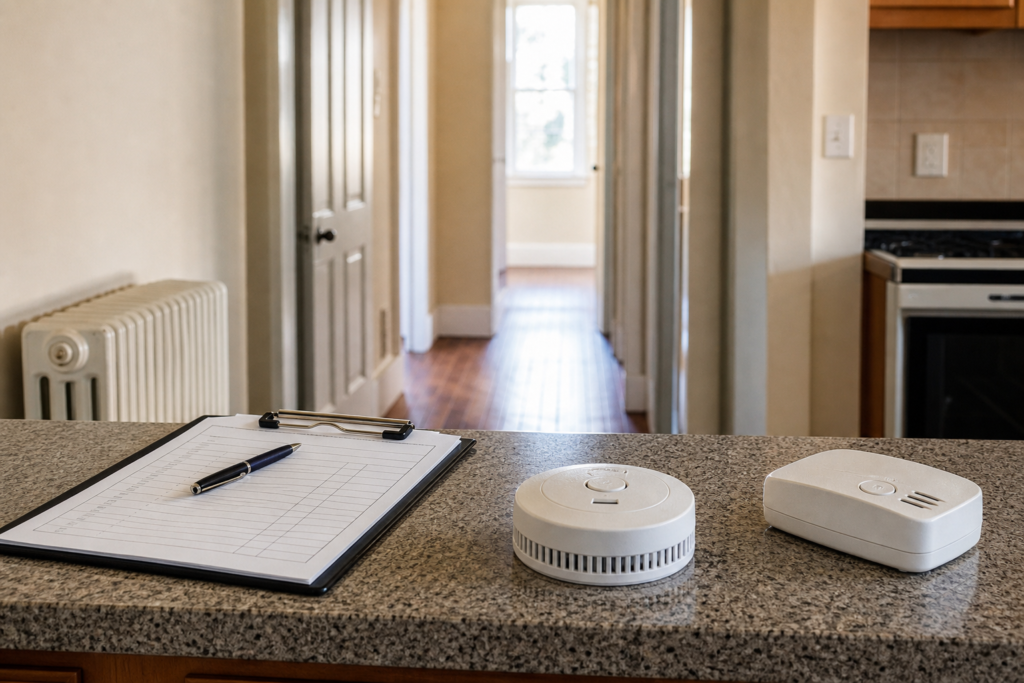
Before any big project, hire the candidate for a small, real task: replace a few smoke alarm batteries, re-caulk a tub, fix a dripping faucet. Ask for before-and-after photos and a short written note of what they saw. You learn how fast they respond and whether their photos are useful.
5. Check two references and one paper trail
Ask for two recent customers, ideally other landlords or property managers. Ask them: Did they show up on time? Did the final bill match the quote? Would you hire them again? Then search the business name with “complaint” or “scam,” as the FTC suggests.
6. Put it in writing, and pay in stages
For anything beyond a quick fix, use a short written agreement: name, address, phone, license number, scope of work, price, start and finish dates. The FTC warns against paying everything up front or in cash, notes that some states cap down payments, and advises never making the final payment until the work is done and you’re satisfied. A scammer who asks you to pull the permit is another red flag on the FTC’s list.
7. Get the paperwork for tax time
Collect a Form W-9 before the first payment, not in January. Whether you need to send a 1099 depends on how much you pay them and how; the reporting threshold changed for 2026, which we explain in our 1099 threshold article.
A simple way to run it from far away
An illustrative setup that works for one or two houses: one vetted handyman for small jobs, one licensed plumber, one electrician and one HVAC company, each with a pre-approved spending limit (say, $300 without calling you). Keep their license numbers, COI expiration dates and W-9s in one shared spreadsheet. Give your tenant the approved list. This plugs straight into the triage steps in our 2 a.m. repair-call playbook, and the repair line in your reserve plan covers the bills.
Monday checklist
- Look up your property’s state and city licensing rules for handyman vs. trade work, and note the dollar limit if there is one.
- Find two handyman candidates and verify each license (or local registration) online.
- Request a COI from each, sent by their insurance agent, and calendar the expiration dates.
- If the house is pre-1978, confirm at least one vendor is an EPA lead-safe certified firm.
- Book a small paid trial job and judge the photos and the communication.
- Collect a W-9 and set a written spending limit before the first real job.
- If you’d rather not manage vendors at all, read our guide on hiring a property management company, or see how to manage an out-of-state rental by yourself.
This article is for general educational purposes only and is not legal, tax, financial or investment advice. Licensing, insurance and lead-safety rules vary by state and city and can change; confirm the requirements for your property with the relevant agencies and consult qualified professionals before making decisions. Dollar figures in the example setup are illustrative, not quotes.