HUD Will Survey 10,000 Rental Owners in 2027 About Evictions and Disaster Repairs: What the Last Survey Says About Landlords Like You


On September 25, 2026, HUD published a notice in the Federal Register that most landlord blogs will skip: the plan for the 2027 Rental Housing Finance Survey (RHFS). It’s the only federal survey that asks rental owners directly about their mortgages, expenses and management, and in 2027 it adds evictions and disaster repair costs.
Owners of one-to-four-unit rentals should care for two reasons. You might get the survey. And the last round, the 2024 survey released as microdata in February 2026, is the best public benchmark for how owners like you actually run their properties.
What the notice says (fact)
- Who gets asked: “Owners and managers of rental properties.” HUD estimates 10,000 respondents at about one hour each. The survey runs once every three years (91 FR 60978, FR Doc. 2026-19651).
- What’s new for 2027: questions on the types of rental properties owned by people with several properties, new categories of maintenance, repair and capital-improvement costs “including costs associated with natural disasters,” and “data on evictions and the eviction process.”
- What stays the same: property value, rents and vacancy, who manages the property, who owns it, a detailed mortgage section, and government benefits received.
- Comment deadline: November 24, 2026, through regulations.gov (OMB Control No. 2528-0276). HUD specifically asks whether the burden estimate is accurate and how to reduce it.
The misconception: “A government letter asking about my mortgage is a scam, or else I have to answer it”
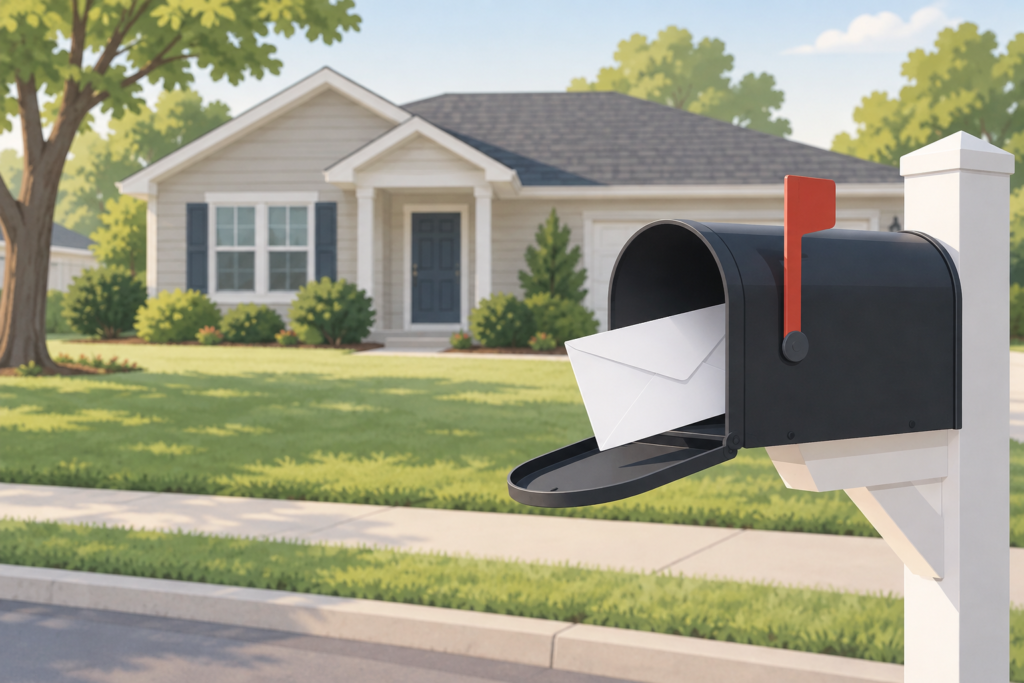
Neither is automatically true. The Census Bureau runs the survey for HUD, and its 2024 methodology statement lists the type of request as “Voluntary.” Sampled owners get a letter inviting them to answer online through the Census Bureau Respondent Portal with an authentication code. Field staff follow up with owners who don’t respond or couldn’t be reached by mail. The Bureau’s respondent information page says any web address in the letter should be on a census.gov domain, and any email about the survey will come from a census.gov address.
Interpretation, not fact: for an absentee owner, the practical risk is a letter landing at the property and being handled by a tenant or manager. The survey asks who manages the property and gives the manager’s contact details. So tell your property manager in advance how you want survey mail forwarded, rather than letting someone else answer questions about your financing.
What the 2024 survey says about small rentals
We tabulated the Census Bureau’s 2024 RHFS public-use file (version 1.0, released February 19, 2026) using the official property weights. The reference year is calendar 2023. The file covers about 19.0 million rental properties, and about 18.5 million of them have one to four units. These are survey estimates, not a census. Our 90% margins of error, calculated from the file’s replicate weights, run from about ±2 to ±8 percentage points depending on the item, so read them as rounded figures.
- Ownership: about 65% of 1-4 unit rental properties are owned by individual investors (including couples), and about 22% by an LLC, LP or LLP. HUD’s 2021 release put individual ownership of small rentals at 70%. We don’t claim a statistically significant shift.
- Management: about 57% are managed day to day by the owner or an unpaid family member. About 22% use a management company and about 15% use a manager the owner employs directly.
- Debt: only about 37% carry a mortgage or similar debt. Most small rentals are owned free and clear.
- Scale: about 55% of owners of small rentals own at least one other property. Among those, roughly three in four own 1-10 others.
- Vouchers: only about 7.5% said yes when asked if they accept HUD vouchers. Another 14% said “don’t know.”
- Single-family benchmarks (median per property, 2023, among owners reporting a non-zero amount): insurance about $1,200, maintenance and repairs about $2,000, estimated market value about $250,000. These medians come from roughly 140-340 sampled single-unit properties, so treat them as rough.
What this means for an out-of-state owner (interpretation, not fact)
1. You’re the typical landlord, not an outlier. Most US rental properties are single-family homes owned by individuals, and most are self-managed. The new eviction and disaster-cost questions are the data HUD will use in future policy debates that affect owners like you.
2. The disaster-cost questions reward owners who keep records. If you can’t separate storm or flood repairs from routine maintenance in your books, you’ll struggle to answer the 2027 survey. That same separation also matters for insurance claims, casualty-loss documentation and flood-map decisions. Ask your manager to code disaster-related work orders separately starting now.
3. The benchmarks are a sanity check, not a target. If your single-family insurance bill is several times the $1,200 median, the reason may be location (coastal, wildfire or flood exposure) rather than a bad policy. But it’s worth a second quote. A repair spend well below $2,000 a year on an older house can mean deferred maintenance rather than efficiency.
4. You can comment. If a one-hour burden estimate or the eviction questions seem unrealistic for someone managing from another state, the notice explicitly asks for that feedback before November 24.
A five-step checklist
- Tell your property manager to forward any Census Bureau or HUD survey mail to you, not answer it on your behalf.
- Verify any survey letter or email by checking that it points to a census.gov address before you enter anything.
- Split your 2026 expense ledger into routine repairs, capital improvements and disaster-related costs.
- Compare your insurance and repair spend per property with the benchmarks above, and re-quote insurance if you’re far above them.
- If you want a say in how evictions and disaster costs are measured, submit a comment on OMB Control No. 2528-0276 by November 24, 2026.
Related guides: how to manage out-of-state real estate by yourself, how to hire a property management company, federal reporting rules for LLC-owned rentals, and whether out-of-state investing is right for you.
Sources: HUD, 60-Day Notice: 2027 Rental Housing Finance Survey, 91 FR 60978 (Sept. 25, 2026); Census Bureau, 2024 RHFS Public Use File and codebook; 2024 RHFS methodology; RHFS information for respondents; HUD/Census 2021 RHFS release. The percentages and medians in this article are Remote Real Estate’s own tabulations of the public-use file, not figures published by HUD or the Census Bureau.
This article is for general educational purposes only and is not legal, tax, lending, insurance or investment advice. Survey procedures and federal rules can change; check the primary sources and consult qualified professionals about your own situation.